

要約。この2ページには、1572年7月5日にウェストミンスターで書かれたBurghleyからWalsinghamへの手紙がある。手紙は平文の英語で、短い暗号化された一節が一つあり、フランス国王がフランドル計画から手を引きつつあるという噂を扱っている。その一節には、枠で囲まれた名前コード([2]、[3]、[4]、[5])、モノグラム、単独の文字AとF、そして5文字の区間「m o R. d A.」が使われている。Dudley Diggesはこの手紙と7月13日付のWalsinghamの返信をThe Compleat Ambassador(1655年)で刊行したが、コードは暗号のまま残した。Calendar of State Papers Foreignにはどちらの手紙も収められていない。状況とWalsinghamの返信から、[3]はフランス国王と同定できる。それ以外は何も確定できない。ほかの項目はそれぞれ1、2回しか現れず、この通信の鍵は残っていない。15の暗号トークンのうち、[3]の2回の使用が同定され、残りは解読されていない。
01 レコード
Harley MS 260は、1570–73年のWalsinghamのフランス大使館の清書版書簡控え帳で、Diggesが刊行の底本とした本である。DECODE R8358には画像が2枚あり、順序が逆になっている:
- f. 262r(DECODE P2):先行するBurghleyの手紙の末尾(「I am sorry for them, and so would you also yf you thought the suspicion to be true」)で、William Burleighの署名があり、「To his very frend Mr Frauncis Walsingham Esquire Ambassador Resident for the Queenes Matie in Fraunce」と宛てられている。続いて暗号を含む手紙が始まる:「My Lord Ambassador, this day my Lord Admirall came to the Queenes speech」。
- f. 262v(DECODE P1):手紙の末尾「From Westminster the 5th of July 1572」で、「Yor assured frend William Burleigh」と署名されている。続いてWalsinghamからBurghleyへの返信の宛名があり、「Your Lordship’s of the second and 5th of July」で始まる。
02 暗号
I am sorry that the opinion groweth here of the French King’s recoil from the Flanders enterprise; it breedeth coldness here. Some that are come home bear us in hand that [3] reneweth the m o R. d A. [4] whereby the last matter ⅋B [5] is hindered. I marvel much thereof; indeed [3] is more given to Milan [4] then to [2]. … I see no means by worldly means A but Florence with F. [2]; God send it some way.
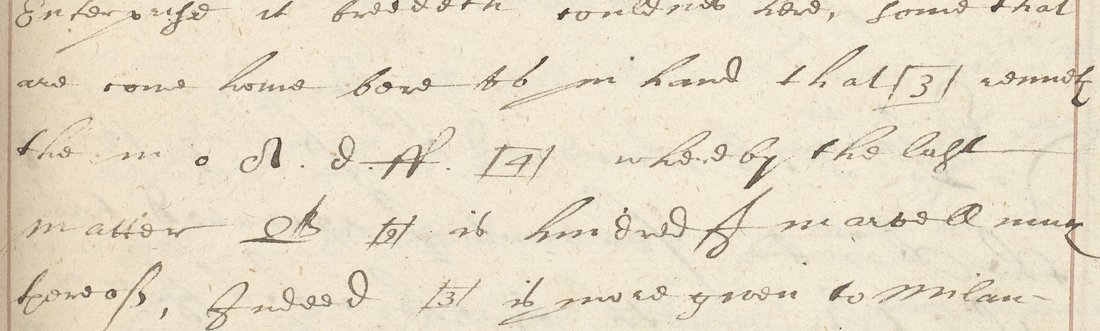
Diggesは同じ一節を「[3 | reneweth the in o A. D. F. [4] whereby the last matter Bl5! is hindred … indeed 3| is more given to Millane 4] thentoſs|」と組んでいる。転写では11種、15個の暗号トークンを数える。
03 同定できたこと
- [3]はフランス国王シャルル9世(評価C)。2回の使用はどちらも「the French King’s recoil from the Flanders enterprise」で始まる段落に現れる。7月13日にフランス宮廷から書いたWalsinghamはこう答えている:「I find the conjectures touching the [3] reneweth the … altogether false and vain, whereof I am assured of the contrary many ways」。Diggesは「vain」を「Fain」と誤植している。
- 「Milan [4]」。この本では、語の後に書かれた枠は偽名を示す(1572年11月の書簡控え帳のページを参照)。したがって「Milan」はおそらく偽名で、スペインを指すのかもしれず、[4]はその標識である。これは評価していない。
04 試みたこと
- 刊本。Digges 1655は両方の手紙を、暗号を数字にして刊行している。CSP Foreign x、1572年7月(nos. 452–492)にはどちらの手紙も含まれていない。署名のある原本は確認していない。
- 鍵。DECODEにはHarley 260由来の鍵の記録はない。Tomokiyoのエリザベス朝暗号の概観には、Walsinghamのパリ大使館の鍵はない。1568年のCecil–Norrisの表は、兄弟資料の符号群ですでに失敗している(WalsinghamからBurghleyへ、1573年1月)。
- 兄弟資料。同じ巻の記録R8356–R8364をこのプロジェクトで調べている。どれにも鍵や注記はない。
- 文脈。すべてのトークンを、手紙、返信、偽名の規則に照らして評価し直した。確定したのは[3]だけである。
05 未解決の点
- 「m o R. d A.」は解読されていない。未知の暗号による5文字で、鍵なしで暗号解析するには短すぎる。おそらく[3]が「renew」したと言われたものである。
- [2]、[4]、[5]、モノグラム⅋B、A、Fは解読されていない。失われた鍵か、SP 70やHatfieldに残っていれば、書記の解読が付いたBurghleyの署名入り原本が必要である。
06 出典
- British Library, Harley MS 260 f. 262:DECODE R8358(画像はログインが必要。f. 262rの切り抜き一つを上に掲載)。
- Dudley Digges, The Compleat Ambassador (London, 1655)、1572年7月:archive.org。
- Calendar of State Papers, Foreign, Elizabeth, x (1572–74)、1572年7月:British History Online。
- S. Tomokiyo, “Ciphers in Elizabethan England”, cryptiana (elizabeth.htm).
注、転写、プロファイルはtargets/r8358/にある。