01 Write-ups
- not solvedThe Indus script: Parpola’s decipherment and 2,364 registered testsc. 2600–1900 BCEAsko Parpola’s Dravidian readings checked on two independent corpora, then 2,364 hypotheses registered before testing (1,224 held, 1,140 failed), with Linear B and Ur III seal legends as controls. The grammar a reading must fit is set out: an ending slot chosen by the name’s last sign, line breaks that never split a word unit, numerals fixed with what they count. Seal names are individual compositions, as Linear B personal names are. No sign value is established.
- not solvedLinear A: how far the tablets can be read without knowing the languagec. 1800–1450 BCLinear A is a script with an unknown language, not a cipher, and no bilingual text exists. Tested against a random null, the Linear B sound values carry over (six word matches against 0.49 expected), and 41.8% of the corpus gives sense without the language: numbers, fractions, commodities, KU-RO totals, KI-RO deficits and three place names. Tablet HT 34 contradicts the published values of the fraction signs H and A; the proposed Semitic and Luwian relatives fit no better than Hawaiian or Yoruba. Sixty-seven rounds of pre-registered tests describe the language’s sound shape (rare e and o, standing mainly after R and T; consonant harmony), the Minoan names that survive at Knossos, and the scribes’ bookkeeping, until new tests stopped yielding results.
- existing decipherment
 Benedict XIII’s cipher letters to Francesc Climent, 1399–14161399–1416Fourteen letters of the Avignon pope and his circle with ciphered passages in a simple substitution of invented signs, reported by Meister in 1906 with no decipherment. Canon Puig y Puig deciphered and printed them in 1920. His decipherment was checked against his one facsimile page, and his unprinted key rebuilt from it (91% of the page’s cipher letters confirmed).
 - existing decipherment
 A Catalan letter in transposition, Barcelona, 2 May [1413–16]1413–16A letter to the King of Aragon in plain Catalan, cut into chunks and written down the columns of each block, listed on DECODE as a cipher of unknown type. Xavier de Salas explained the transposition and printed a complete decipherment in 1931. His rule was checked on the archive’s image and reproduces his text.
 - not solvedThe Voynich manuscriptc.1420Statistical tests on the transliteration of Beinecke MS 408; no text was obtained. Plaintext and simple substitution, transposition or abjad renderings of eleven European languages are excluded. A verbose cipher of glyph groups and structured meaningless text remain, about even.
- known key appliedGaleotto da Ricasoli to the Dieci di Balía, Urbino 14251425A letter of Florence’s envoy to the Count of Urbino. Gabbrielli built a partial key in 1863 from a few glossed words (printed by Meister in 1902), so DECODE’s “non-decrypted” means only that no decipherment is on the record. His key was applied and extended from the glossed runs of three sibling letters (R3755–R3757): 98% of the 99 cipher symbols now have a value. The letter describes Galeotto’s mission to Urbino after the defeat at Zagonara.
- existing deciphermentAlchymey teuczsch, an alchemists’ notebook of 14261426Heidelberg Cod. Pal. germ. 597 hides substance names in three home-made alphabets of graphic signs, and DECODE lists it with no decipherment. Wilhelm Wattenbach deciphered the alphabets in 1869 and printed passages with their plaintexts. The values of the signs were recovered here from the images by aligning them with those plaintexts.
- ciphertext-only break · partialThe cipher letters of the Concistoro of Siena, Concistoro 2308c. 1420–1547A bundle of 25 cipher pieces sent to the Sienese government, photographed on DECODE beside 43 filed keys, none of which fits any letter. Keys recovered from the ciphertext alone decipher a slip on a lord’s route by Radicondoli and Casole (96%), Latin treaty articles with the Emperor against the Florentines (87%) and an envoys’ letter written while Carlo Malatesta was alive (59%); an alphabet fragment on the letter itself deciphers Galgano Borghesi’s letter from Naples of 1456 (79%). Meister’s 1421 letter was never photographed.
- ciphertext-only break · partial
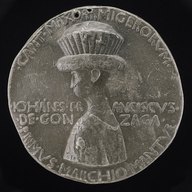 Cipher letters to Gianfrancesco Gonzaga, 1428–14301428–1430DECODE R1854, catalogued as one letter of unknown sender, is four letters to the lord of Mantua in four different homophonic ciphers of graphic signs. Two keys were recovered from the ciphertext alone and a third from a faint contemporary interlinear decipherment; the three letters are deciphered at 96.6–100%. Pandolfo Malatesta’s three cipher runs of 1428 are not deciphered.
 - not solved
 Queen María to Alfonso V, Valencia 14351435A register copy with 42 cipher signs in clear Catalan (ACA reg. 3225 f. 59r, DECODE R10171); not solved. The two printed Aragonese keys of the decade were tested and four neighbouring registers searched; the 1429 key’s nomenclator may match the word signs, its alphabet does not. No decipherment is known.
 - not solved
 Sforza chancery to Zorzo Maino, 14461446A slip in clear Lombard Italian with runs of a cipher of invented signs (BnF italien 1583 f. 68, DECODE R7898); not solved. It and a same-day sibling were transcribed and run through a solver, and all 208 Sforza keys on DECODE were checked. A related key shows syllable and word signs; none fits.
 - existing decipherment
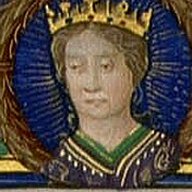
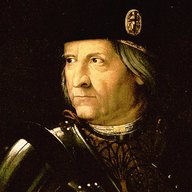 Beatrice d’Aragona’s letters to Ferrara, 1482–15051482–1505Five DECODE records of letters from the Queen of Hungary to the Este court. Decipherments of the four cipher letters were printed in 1877–78, and one letter carries contemporary decipherment slips; the prints were matched to the manuscript images. The fifth is plain Italian of 1505, not 1504, and says she has no cipher.
 - existing decipherment
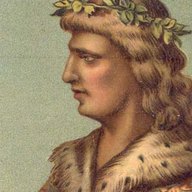 Matthias Corvinus to Ercole I d’Este, 1 June 14821482The King of Hungary on the help he can send Ferrara against Venice, with the military passages in a homophonic substitution of invented signs. The decipherment was printed in 1877 and 1895. The runs were transcribed from the image and a working key rebuilt against the print, which corrects the edition in four places.
 - key from adjacent plaintext · partialNicolò Sadoleto at Pozsony, 14821482Ferrara’s envoy to Matthias Corvinus writes in a substitution of graphic signs with homophones. The key was recovered by aligning two letters with their contemporary clear copies in the same file; two of the four DECODE targets proved to have contemporary decipherments. The letter of 16 July 1482, which has none, is deciphered except a few words under stains: Venice offered Matthias Veglia, a fleet command for his son and 100,000 ducats a year.
- known key applied · partialMaffeo da Treviglio at Buda to Ludovico Sforza, 1489–14901489–90Two ciphered despatches of the Milanese ambassador to Matthias Corvinus with no contemporary decipherment. Somogyi published the key in 2016 only as numbers; matching her numbering to the symbols of a letter with a clear copy turned it back into a usable key, which was applied. The letter of 12 January 1490 is deciphered in gist throughout and the four-page letter of 22 November 1489 in part: peace with the Emperor, the Diet, and John Corvinus’s marriage.
- known key applied · partial
 BnF Espagnol 318: five ciphered letters, 1497–15041497–1504Five letters in the ciphers of Ferdinand and Isabella’s secretariat. No. 5 was already deciphered in print (Parisi 2020); no. 92 was deciphered to about three quarters with the Cifra general printed by Galende Díaz, confirmed against interlinear glosses; no. 95 to about two thirds with George Lasry’s 2022 alphabet. Nos. 93 and 94 belong to a cipher family whose key is not online.
 - known key applied · partial
 Isabella of Castile to the Duke of Estrada, 20 August 15031503The letter Bergenroth could not decipher in 1862 survives in three ciphered copies in AGS Patronato Real leg. 53 doc. 69. Its key is the Cifra general de los Reyes Católicos printed by Galende Díaz in 1994; applied unchanged, it decodes every code group, while about half the runs of single-letter symbols are too small to decipher on the online images. The letter concerns the French attack on Roussillon and asks Henry VII for two thousand English foot.
 - key from adjacent plaintext · partialFerdinand the Catholic to Jerónimo de Vich, 1511–121511–12Three letters wholly in a nomenclator of homophones and three-letter code groups. The key was recovered by aligning two sibling letters with the clerk’s decipherment filed after them, then applied to the three; about 5–14% of each text remains without a value or doubtful. Julius II’s cardinals, Ravenna, the Sforza restoration and spiritual war on Louis XII; the 1515 letter is in another system and was not deciphered.
- existing decipherment
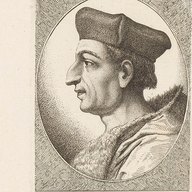
 Cardinal Schiner to Henry VIII, Trent, 14 June 15161516Schiner’s autograph letter on Maximilian’s offer of Milan and the Empire to Henry, which Letters and Papers called “not deciphered”. Büchi and Schiess deciphered it and printed it in full in 1925. That printed decipherment was found; the leaf is not digitised, so it could not be checked against the cipher.
 - known key applied
 Diego López de Ayala to Cardinal Cisneros, 30 August 15161516A five-page letter in invented signs (AGS Estado leg. 496 fol. 22, DECODE R9954), catalogued with no decipherment. Tomokiyo’s key for Ayala’s letter of 12 July was applied unchanged and the letter was deciphered but for seven words. A Simancas decipherment of 1849, printed in 1875 and found afterwards, settles those words and otherwise agrees.
 - key from adjacent plaintextThomas Spinelly to Henry VIII, Brussels 15171517A clear English despatch of 1 February 1517 (Cotton MS Galba B V, DECODE R8416) with five lines in a simple substitution of invented signs. The key was recovered from a crib in the clear text of the same page, the word ‘audensier’, and the passage deciphered in full: the King’s entry into Brussels expected that week and the Emperor to go to Cambrai about the 15th.
- known key applied · partialTwo ciphers in the Strängnäs sequentiary, 15171517Uppsala UB C 513 (DECODE R4349) has a dating colophon in which every vowel is written as the next letter; the Uppsala catalogue printed the rule and the decipherment in 1992, and the colophon was transcribed and decoded to the same text. The six signs closing an Old Swedish note pasted on f. 1r, DECODE’s “six symbols”, are too few to decipher.
- not solvedBenedetto Fantini, Buda and Eger, 1517–181517–1518Two letters of an Este agent in Hungary in a two-tier cipher of graphic signs (DECODE R1126, R1127, catalogued as ‘Jantini’); not solved. The cipher was transcribed and tried ciphertext-only and with Caprile’s 1519 values; controls show this syllabic system with word codes cannot be solved without a key or crib.
- key from external plaintext · partialGiuliano Caprile and Alfonso Cistarelli at Eger, 1519–211519–21Letters of two Este agents in Hungary. Most already had decipherments, from 1882 or printed in 2025. The homophonic key of the 1520–21 cipher of graphic signs was rebuilt by aligning the ciphertext with the 2025 decipherment and gives phrases from two further letters; two items stay open.
- key from external plaintext

 Adrian of Utrecht and the governors of Castile to Charles V, 15211521A letter almost entirely in a nomenclator, deciphered in the nineteenth century by Claudio Pérez Gredilla and printed in 1899. The key was rebuilt by aligning the ciphertext with his text. It corrects the dead king from England to Manuel I of Portugal and decodes or corrects about seventeen of the groups he left blank.
 - existing deciphermentLa Chaulx to Charles V, Vitoria, 28 May 15221522DECODE R1187, catalogued as a Spanish cipher letter of 1 January 1522, is a French despatch, mostly on Adrian VI’s departure for Rome, with five passages in a homophonic cipher. The contemporary decipherment of all five is bound with it; it was checked against the first cipher line, and the key was not rebuilt.
- known key applied · partialAlonso Sánchez at Venice to Charles V, 15221522Twenty-nine DECODE records catalogued as ciphertexts with no decipherment; most have a contemporary decipherment bound with them, and Satoshi Tomokiyo published the key in 2025. His key was applied to two letters outside his coverage, R9653 (the siege of Rhodes) and R9635, which were deciphered in part. The alphabetical order of the nomenclator predicted the missing numeral codes, three of them then found in the text, and the Lope Hurtado letters in the run use a different cipher.
- key from adjacent plaintext · partialLope Hurtado de Mendoza at Rome to Charles V, 15221522Nine letters of the imperial agent in Rome, bound and catalogued among Alonso Sánchez’s Venice letters but in a different nomenclator, for which no published key was found. The key was recovered from adjacent plaintext: two of the letters have the clerk’s full contemporary clear version bound beside them. Four letters are complete in content; the five with no clear version give fragments, because the substitution alphabet is still incomplete at DECODE’s image resolution.
- external key matched · partialThe Duke of Sessa to Charles V, February–April 15231523DECODE R9660–R9666, catalogued as seven letters of “Luis Fernández?” to an unknown recipient, are the Duke of Sessa’s despatches to Charles V in RAH Salazar A-27; Bergenroth calendared four of them in 1866 from the court’s decipherments. The cipher is Sessa’s 1524 nomenclator, and the key recovered earlier in this project was applied: the uncalendared 26 April letter is decrypted in full, the 20 February letter about 57%.
- known key appliedAlonso Sánchez at Venice to Charles V, May–August 15231523Ten records catalogued as ciphertexts to an unknown recipient are Sánchez’s despatches to the Emperor in his 1522 cipher, and Tomokiyo’s key applies unchanged. Seven were calendared by Bergenroth in 1866 from the contemporary decipherings. Of the three August letters not in the Calendar, Sánchez’s own of 16 August was transcribed and its code groups decoded; its spelled runs are deciphered in part.
- ciphertext-only break · partialLope de Soria to Charles V, Genoa, 15231523Five despatches from Genoa, June to August 1523 (DECODE R9488–R9498), in two ciphers; no earlier decipherment was found. The key of the earlier cipher was recovered from the ciphertext alone with a solver scored on 1520s Castilian; the key of the later one was rebuilt from a Soria letter of December 1523 filed with the court’s decipherment. The June and July letters are deciphered nearly throughout, the later ones in part: the Venetian league, Siena, money for the Swiss and Andrea Doria’s offer of his galleys.
- key from adjacent plaintext · partialLope Hurtado de Mendoza at Rome to Charles V and Gattinara, 1523–241523–24Eight letters catalogued as June 1523 ciphertexts to an unknown recipient are Hurtado’s letters of May 1523 to March 1524 to Charles V and the Grand Chancellor Gattinara, in the system of 1522 with a changed key. The key was recovered from adjacent plaintext, the clerk’s clear version of part of the letter of 5 February 1524. Two letters were calendared by Bergenroth from contemporary decipherments; the other six are partly deciphered, from a quarter to two thirds of each.
- key from adjacent plaintext · partialThe Duke of Sessa to Charles V, Rome, 18 April 15241524Catalogued on DECODE as a letter of Luis Fernández of April 1424, this is the Duke of Sessa’s despatch of 18 April 1524 and its duplicate. The key was recovered from adjacent plaintext: sibling letters of Sessa in the same volume carry the court’s decipherments, which gave about 110 code groups and nearly the whole alphabet. The nine cipher lines are deciphered word by word except four code groups and one clause.
- key from external plaintext
 Hugo de Moncada to Charles V, Monaco 15241524Moncada’s letter of 6 October 1524 (BNE MSS/20213/12, DECODE R1191), half in a homophonic cipher of Spanish letters with a few code groups. The secretariat’s decipherment was printed in 1854 with one gap; the key was recovered by aligning the 442 cipher signs with that print and then applied to the gap. Bourbon had asked to be carried to Spain in Moncada’s galleys; 428 of the 442 signs have a value.
 - ciphertext-only break
 Charles of Egmond to the grand master of France18 July (?) · year unknownGeorge Lasry recovered the key to this cipher in 2023; this is an independent re-solution. The key, a simple substitution of graphic signs with nulls, was recovered again from the ciphertext alone, and the French body and ciphered address of BnF fr. 3015 no. 8 were decrypted in full. Charles asks for continued support in the war and commends his ambassador, the commander of Saint John; Arnhem, apparently 18 July, year unknown.
 - not solvedMellon MS 29: the cipher names in Frater Elias’s Lumen luminumc. 1525An alchemical codex of about 1525, catalogued on DECODE as a letter; its prologue gives zodiac cover names and two recipes in about 234 letters of cipher. Substitution, homophonic, polyalphabetic and Alberti-disk solutions against Italian and Latin gave no plaintext; not solved, and the strings may be invented names.
- known key applied · partial
 Nicolas Raince to Montmorency, Rome, 15261526The ciphered passages of two despatches from Rome, 13 May and 20 November 1526 (BnF fr. 2984), have no known decipherment. Tomokiyo’s published key, first taken off his table one column out, was re-measured, checked symbol by symbol on the leaf and applied. 86 of the 106 lines were deciphered by hand from the Gallica microfilm; the rest need better images.
 - not solvedGilbert Bayard to Montmorency, Toledo 15261526Three lines of cipher in graphic signs in a copy of a letter from the Toledo negotiations (BnF Clairambault 325 f. 84, DECODE R2285); not solved. The 1847 edition omits the cipher. The 56 signs were transcribed; the Calvimont and Raince keys of the same years do not fit, and the passage is too short for a ciphertext-only solution.
- existing decipherment
 Ghinucci, Lee and Poyntz to Wolsey, 15271527DECODE R8565, catalogued as a letter of Francis Poyntz to an unknown recipient, is the second part of the three ambassadors’ despatch to Wolsey from Valladolid, 17 July 1527. Its short passages in the Lee–Worcester cipher were deciphered on arrival by Brian Tuke, and the decipherment is printed in Letters and Papers IV no. 3271. The letter was identified and the catalogue corrected.
 - known key applied · partial
 Del Vasto to Charles V, and a letter to “Garbino”, 1527–281527–28Three imperial ciphers in BnF fr. 3022. No. 10 had been deciphered by Lasry and Tomokiyo; no. 6, del Vasto’s letter of December 1527, was deciphered here with Lasry’s preliminary key extended with code groups from context, 98% of its cipher signs giving sense. No. 20 is in Hieronimo Ranzo’s initial-letter code, whose numbering is not alphabetical; without the key only its function words were recovered.
 - known key applied · partialGaleazzo Visconti to Montmorency, Landriano, 30 August 15281528An unsigned cipher letter (BnF fr. 3034 f. 154, DECODE R4223) in Galeazzo Visconti’s invented-sign cipher. George Lasry’s 2023 key, published without a decipherment, was applied and extended on the letter, and 93.3% of the cipher signs give sense. Visconti reports the council of war at Landriano over marching on Milan or Pavia, which he lost; the numbered name codes stay open.
- known key applied
 Galeazzo Visconti to Angelo Bolano and to Francis I, 1528–15291528–1529Two sibling letters of the Landriano cipher (BnF fr. 3045 f. 28 and fr. 3096 f. 91). Lasry’s key was applied and extended with five rules found on them, among them a sign that doubles the next letter; 95.3% of the cipher signs give sense. Visconti reports Venetian fears of the peace six days before Landriano, and the desertions in the League army after Savona.
 - known key applied · partialSormano and Passano from Ferrara to François I, 15291529Three letters of February 1529 (BnF fr. 3096 nos. 63, 65, 66) in a homophonic cipher of graphic symbols with a nomenclator. Eight attempts to recover the key from the microfilm failed; George Lasry’s published key was then applied to short passages, checked against the duplicate letter, and agrees with 20 of the 22 values derived here. The Duke of Ferrara refuses the kingdom; about 5% of the cipher is decrypted and a full transcription remains.
- known key appliedSormano and de Vaulx to François I, Ferrara 15291529Three despatches of the French agents at Ferrara in BnF fr. 3096, in a homophonic cipher of geometric signs. George Lasry’s key for the volume was applied; the contribution is the transcription of some 18,000 signs and their decryption, complete for nos. 65 and 66 and partial for no. 63, with a null and a code sign for the duke added to the key. Alfonso d’Este refuses the crown of Naples and the command of the French army.
- known key appliedGramont, Mâcon and Langeac to Montmorency, 1529–15371529–37Four letters to Anne de Montmorency from the French ambassadors at Rome and Venice, each in its own homophonic cipher. George Lasry recovered the four keys in 2023 and deciphered the letters then, unpublished; his keys were applied here to a new transcription of about 9,000 signs. Clement VII on the general council and his dream before Bologna, Saint-Pol’s wish to leave the army, the princes’ return, and Paul III’s Farnese marriage offer.
- known key applied
 Ambrogio Bizozola to Maximilian Sforza, Bologna, 4 November 15291529A four-page letter in invented signs to the exiled Duke of Milan (BnF fr. 3034 ff. 156–157, DECODE R4224). George Lasry published the key in 2023 but no decipherment; it was applied here and 97% of the cipher signs give sense. Written on the eve of Charles V’s entry into Bologna, it reports that the Emperor’s council was discussing a partition of the state of Milan.
 - ciphertext-only break · partial
 Guido Rangone to Montmorency, 1529–15301529–1530Two short cipher passages in Rangone’s Italian letters from Venice (BnF fr. 3070 f. 81 and its sibling fr. 3082 f. 42), in a homophonic substitution of about fifty invented signs; no key or decipherment is known. The key was recovered from the ciphertext alone by simulated annealing, and 232 of 264 signs (88%) give sense. Both passages concern Cesare Fregoso, Rangone’s brother-in-law, and the offers Venice made him.
 - ciphertext-only breakPassano to Francis I on Wolsey’s assets, 15301530A ciphered Italian account of Cardinal Wolsey’s cash, credits, plate and revenues, in an eighteenth-century copy of a London letter of March 1530 (BnF Clairambault 331 f. 157). The key of this letter substitution, where a dot over a sign makes a different letter, was recovered from the ciphertext alone; 386 of 402 surviving signs (96%) give coherent Italian. A page of cipher omitted by the copyist is lost.
- key from adjacent plaintext
 Jörg Weinmeister to the Dukes of Bavaria, spring 15331533Catalogued as a ciphered letter of “Augurellio”, it is a report from the Bavarian agent Jörg Weinmeister, who signs in cipher, on King John’s siege of Palota in 1533. The homophonic key of the volume’s System A′ was recovered from contemporary glosses on a sibling letter and on this one (adjacent plaintext), and 96.7% of the letter’s words are deciphered.
 - key from adjacent plaintext · partial
 King John of Hungary and an agent at Buda to the dukes of Bavaria, 15341534Two letters filed under Cornelio Sperantio are letters to the dukes of Bavaria sent under cover to him. King John Zápolya’s Latin letter of 6 February 1534 carries a contemporary interlinear decipherment; the homophonic key was recovered from it (adjacent plaintext) and deciphers 95% of a German newsletter from Buda of 8 February on Werbőczy’s peace with the Turk. It is the same key as R9415’s.
 - key from adjacent plaintext · partial
 Łaski, King John and a Bavarian at Wardein to the Dukes of Bavaria, 1531–15371531–1537Three letters to the Bavarian court, catalogued on DECODE as one entry. Łaski’s letter of 1531 was deciphered (99.5%) with his key, recovered earlier from glossed letters in the same volume. The keys of two new homophonic alphabets were recovered from short contemporary glosses and a solver: a Latin letter from King John’s side of 1533 (95.3%) and a German report from Wardein of 1537 (91.3%).
 - known key applied
 Cardinal Campeggio’s conclave articles for Francis I, c. 1534c. 1534Catalogued as a letter of the French marshals to the King dated 1520 (BnF fr. 3081 f. 41, DECODE R2322), the two cipher pages are a copy of the articles Cardinal Campeggio swore to the cardinals Bourbon, Lorraine and Tournon: if elected pope, he would work for the return of Milan, Asti and Genoa to Francis I. George Lasry recovered the key and deciphered the first page in 2022. His key was applied here to the second page, which had no published decipherment, with five small corrections; all but one symbol and one code group are decrypted.
 - known key applied · partial
 Georges de Selve at Venice to Francis I, 1535–15361535–36Two despatches of Georges de Selve, bishop of Lavaur, ambassador at Venice, to Francis I (BnF fr. 3091 f. 25 and fr. 3045 ff. 42–49; DECODE R3697, R4232), both listed as not decrypted. Satoshi Tomokiyo had published the key as a table, with no plaintext; it was applied and extended with further homophones, nulls and a name code. The 1536 letter is decrypted at 99.1% (the Emperor’s design on Marseille, the galleys, the Pope and the tenths), and the 1535 letter, on a film scan with struck runs, at 95% outside the strikes.
 - known key applied · partialThe cardinal de Mâcon in Rome to Montmorency, 1536–15371536–37Eight ciphered records of BnF fr. 3053, catalogued with no sender, are letters of Charles Hémard de Denonville, cardinal of Mâcon, ambassador to Paul III, to Anne de Montmorency. Tomokiyo reconstructed the key from this volume and Lasry tabulated it in 2023, without publishing any plaintext; it was applied, corrected from contemporary glosses, and about 95% of the cipher letters are decrypted. The eighth record is in a second key and was transcribed from its contemporary decipherment on the next leaf. Subjects: the general council, Doria’s galleys, the Farnese design on Milan and an estate in France offered to Pier Luigi Farnese.
- known key appliedCardinal Caracciolo to Charles V, 14 November 15371537A letter from Milan (AGS Estado leg. 1184 fol. 110, DECODE R9966) with eleven cipher lines, listed on DECODE as not decrypted. The key is Wanruo Luo’s Cifrario 38 (2021), a homophonic alphabet with a syllabary of consonant signs and superscript vowel digits; Tomokiyo had named it and given a rough decipherment of four lines. Applied unchanged, the key decrypts all eleven lines (96% of the letters); about ten signs stay doubtful.
- not solved
 Cardinal Farnese to the nuncio Poggio, 1542 (Vatican Challenge Part 5)1542A papal cipher of one- and two-digit codes, set as MysteryTwister’s Vatican Challenge Part 5. Simon Klee recovered the key and a candidate plaintext in September 2026; this page reviews his solution against the manuscript. This project’s own ciphertext-only attempt failed and is kept as a record.
 - known key applied · partial
 Ferdinand I to Giovanni Maria Malvezzi, Augsburg, 23 January 15481548DECODE R366, eight pages: Ferdinand’s letter to his envoy at the Porte, mostly clear Latin with about three pages in a homophonic cipher of graphic signs whose nulls include Latin words. The key is on DECODE at the same shelfmark (R367) and was applied; the work was transcribing a difficult hand. The ciphered passages, decrypted in part, carry the politics (the French working against the Habsburg–Ottoman peace) and the envoy’s pay: 4,300 ducats and a credit of 3,000 more.
 - not a cipher
 Charles V to Prince Philip on a Fugger exchange (catalogued as Burgo to Gattinara, 1527)1543–54DECODE R9970, AGS Estado leg. 1563 fol. 572, catalogued after Galende Díaz as Andrea del Burgo’s ciphered letter to Gattinara from Ferrara, 26 October 1527, holds no cipher. It is two drafts of a clear Spanish minute “al príncipe”: the Emperor tells Prince Philip of an exchange of 110,770 ducats with Anton Fugger, written 1543–1554. The Burgo letter is not on the record.
 - ciphertext-only break · partial
 La Guiche from Rome, 1551, with Noailles and Seure, 15581551Three ambassadors’ letters with ciphered passages, catalogued together. The key of Claude de La Guiche’s cipher of 22 November 1551, a simple substitution of 22 invented symbols, was recovered from the ciphertext alone, and about 87% of the passage decrypted: Dom Diego and the Sienese envoy, and the Count of Santa Fiora ready to come over to the king. Noailles’s Venice letter of 1558 has a contemporary marginal decipherment; Seure’s six Lisbon letters were not attempted.
 - existing decipherment
 Santa Croce to Cardinal del Monte, 15531553Five ciphered despatches of the nuncio in France, deciphered on arrival and printed deciphered by Lestocquoy in 1972. They were transcribed and checked with George Lasry’s key. The same key decrypts three cancelled cipher lines the edition omits: the clear postscript about the royal fleet bound for Corsica.
 - external key matched · partial
 Nicholas Wotton to Queen Mary, Soissons, 13 June 15541554DECODE R8499, catalogued as “N. Wottoy ?” to an unknown recipient, is Wotton’s holograph despatch to Mary I from the French court (BL Harley MS 1582 ff. 8–10), almost wholly in a homophonic cipher of graphic signs. The key sheet DECODE R354 (SP 106/2 f. 162, “France 1554”), filed in another series, was matched to it and applied: 75% of 2,801 signs decrypt firmly, 89% with tentative values. Carew and the rebels in France, and a plan to take the Isle of Wight and Plymouth.
 - key from adjacent plaintext · partialThe Bavarian key volume: fourteen ciphertexts, 1529–15831529–1583Fourteen ciphertexts bound in the Munich chancery’s key volume, catalogued on DECODE as one group, are letters in at least six systems. The Fulda protest of 1576 was deciphered with the key filed beside it, and Łaski’s letters of 1529–30 with a key recovered from their interlinear glosses. Seven German reports of 1534–35 are partly deciphered, with keys recovered from a contemporary gloss or, for one leaf, from the ciphertext alone.
- known key appliedPál Bornemisza to Ferdinand I on the Kendi treason, Transylvania, c. 1556c. 1556DECODE R1212, catalogued as a Latin letter from an unknown sender to “Paulo Borne?” (HHStA Vienna, Chiffrenschlüssel Kt. 13 Fasc. 20 ff. 38–39), is a report in the cipher of Pál Bornemisza, Bishop of Transylvania, to Ferdinand I: Ferenc Kendi, “ter perfidus”, has lost Transylvania to the king. A contemporary hand deciphered nearly every run between the lines, and the key is the next DECODE record, R1211. Every run was decrypted again with that key, correcting the interlinear decipherment in a dozen places; 276 of 288 cipher tokens give sense, and nine number codes not in the key stay open.
- known key applied · partial

 Throckmorton to Elizabeth I, 10 July 1559, and John Wood to Cecil, 15681559, 1568Tomokiyo lists two unidentified ciphers on BL Add MS 4136 ff. 32–33. Throckmorton’s own ciphered letter of 10 July 1559 on f. 32, not printed in Forbes or the Calendar, was decrypted at about 85–90% with Tomokiyo’s key for his Cipher 1, with seven corrections. The margin is a word-sign code (222 groups, half used once) that needs its key or the 8 July despatches, and John Wood’s 39-sign line of 1568 has no unique solution; both are closed without a decryption.
 - not solved
 Sir Henry Percy to Cecil, Norham 15591559Four short passages in pigpen-like box symbols, known only from an eighteenth-century tracing (BL Add MS 4136 f. 172, DECODE R9256); not solved. The 63 signs were tried ciphertext-only and with name cribs from the calendars. Cecil’s contemporary decipherment is on the original at TNA, which is not online.
 - ciphertext-only breakMémoire en chiffre from the Agenais, 12 December 15601560An anonymous ten-page report to the connétable de Montmorency, BnF fr. 3157 no. 67, wholly in a homophonic cipher of cursive signs with two-stroke units and four word codes. No key or decipherment was found; the key was recovered from the ciphertext alone and 98.9% of the cipher words decrypted. The writer reports the Protestant assembly at Clairac, Biron at Bergerac and the rebel captains at Nérac under the king of Navarre.
- existing deciphermentThrockmorton’s ciphered extracts, 1560–631560–63Twenty DECODE records in BL Add MS 4136 hold ciphered extracts whose plaintext has been in print since Forbes (1740–41) and in the Calendar of State Papers, Foreign. Each record was matched to its printed counterpart, and two short passages were decrypted with the surviving key sheet (R9262) as a check. Tomokiyo had identified the texts and keys first.
- known key applied · partial
 Catherine de Médicis and the bishop of Rennes: four cipher letters, 1562–15641562–64Four letters to the French ambassador at the imperial court in the Bishop of Rennes’ cipher, with no contemporary decipherment and none found in print: Catherine’s of 31 July 1563 (BnF fr. 3181 f. 55), whose cipher La Ferrière printed as an empty bracket, a 1564 order to leave the precedence quarrel, Bourdin’s of December 1562 on the leaked marriage overture, and a note to be deciphered by Rennes himself and burned. Tomokiyo’s reconstructed key was applied, with each secretary’s letter forms fixed on glossed letters in the same hand and a language model choosing among ambiguous values. Between 65% and 99% of each letter is decrypted.
 - known key applied
 Sir Thomas Smith to Cecil and the Queen, 1562–15661562–66DECODE records listed as not decrypted are Patrick Forbes’s copies of the ciphered stretches of Sir Thomas Smith’s despatches from France (BL Add MS 4136). Smith’s own key is in the same volume (f. 179, DECODE R9261) and was applied. The 1563 passages agree word for word with Forbes’s print of 1741; the 1564–66 passages, which the Calendar of State Papers only summarises, are decrypted in Smith’s words: the Cardinal of Lorraine banqueting with Condé, the Lennox marriage offer, a bearer “double, or rather triple”.
 - key from adjacent plaintext
 García de Toledo to Philip II, Messina 15651565The duplicate of the viceroy of Sicily’s despatch of 16 July 1565, written during the Great Siege of Malta, with the sensitive words in two-digit figures. The key, a homophonic alphabet on the figures 12–43 in alphabetical order, was recovered from two cribs in the adjacent cleartext, and all 1,930 groups were decrypted. The letter reports that the Piccolo Soccorso reached the Borgo and that La Valette’s fire-signals turned a second relief back.
 - existing decipherment
 Charles IX to Philibert du Croc1565–67 or 1572An undated letter to the French ambassador in Scotland, wholly in a nomenclator of graphic symbols. George Lasry deciphered it; his plaintext overlays, published on Cryptiana in 2022, were compared with the manuscript and transcribed. It gives instructions on James VI’s upbringing and marriage and on English encroachment; the catalogue date of 1550 is an error.
 - known key applied

 Cardinal Alessandrino to the nuncio in Spain, 15671567Six DECODE records catalogued with no sender and dated 1566 are, by the archive’s description of the volume, Cardinal Alessandrino’s ciphered letters of 1567 to the nuncio at Madrid. George Lasry’s reconstructed polyphonic key, attached to the records, was applied unchanged; each digit stands for two letters, and a language model chose between them to decrypt all six. Subjects: Philip II’s journey to Flanders, Borromeo against the Milan senate, the unconfirmed archbishop of Cologne, and advice to imprison the Constable Montmorency.
 - known key applied · partial
 Sir Henry Norreys to Cecil, 1567–681567–68Patrick Forbes’s copy of the enciphered words of seven despatches of Elizabeth’s ambassador in France (DECODE R9251). Tomokiyo’s partial reconstruction of the Cecil–Norris key, from Cabala (1663), was applied; the sibling letters decipher against the Calendar of State Papers, checked with a shuffle control. The 9 March 1568 letter is partial: two of its three items are identified and one four-sign word is open.
 - known key appliedCardinal Alessandrino to the nuncio in Spain, 1568–691568–69Eleven ciphered letters from Pius V’s cardinal-nephew to the nuncio at Madrid (DECODE R93–R102, R115). George Lasry’s known key is polyphonic, every digit standing for two letters, so decryption is ambiguous; the letters were chosen by a search scored with a language model of 16th-century Italian, and all eleven decrypted end to end. A French bride for Philip II, ecclesiastical jurisdiction, Bolognese exiles, the Turk and Borromeo against the Milan senate.
- existing deciphermentMary Queen of Scots to Archbishop Hamilton, 15691569A DECODE record with no names and the date January 1568 is Mary’s letter from Bolton to John Hamilton, 18 January 1569. The contemporary decipherment is bound in after it and was transcribed in full; Tomokiyo’s published key agrees with it on the first cipher line. Bain’s calendar gives only a paraphrase.
- known key applied
 Throckmorton to the Regent Moray, 20 July 15691569Catalogued on DECODE as from an unknown English sender, 26 July, this is Sir Nicholas Throckmorton’s letter pressing Moray to accept the Norfolk marriage plan. It was deciphered between the lines at the time, but a water stain has faded much of that decipherment. Every cipher passage was decrypted with Tomokiyo’s key, filed on the DECODE record, and checked against the legible gloss.
 - known key applied
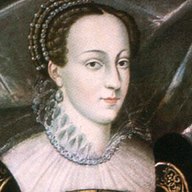
 Mary Queen of Scots to Norfolk, “the 20th”, 15701570The one letter of Mary’s 1570 cipher correspondence with the imprisoned Duke of Norfolk that has no contemporary decipherment (BL Cotton Caligula C II f. 74r). Satoshi Tomokiyo’s key for the series, a simple substitution with word and name signs, was applied to a new transcription of all 23 lines; five signs and a few words stay open. Written after the Regent Moray’s murder, for which Elizabeth blames Mary.
 - existing decipherment
 Randolph to Sussex, 5 July 15701570A letter in clear English with five cipher runs, dated 1569 on DECODE. A crib from Boyd’s calendar abstract recovered about 70% of the cipher words; then the contemporary decipherment was found on the next leaf (R4932) and confirmed every value. The runs concern the Scottish Queen’s party, the stayed regency, Morton, the soldiers’ pay and Grange.
 - not solved
 Walsingham to Burghley, June 15711571DECODE R8356, catalogued as a ciphered letter of Elizabeth, is Walsingham’s Paris letter-book: the Queen’s letter is in clear, and the cipher is a nine-symbol run and two code groups in Walsingham to Burghley of 25 June 1571. Transcribed but not deciphered: no key survives and the run is too short to recover one.
 - key from adjacent plaintext · partialClaude de Mondoucet to Charles IX, 1572–731571–74Despatches from the Low Countries (BnF fr. 16127) in a homophonic cipher of one symbol per letter. The keys were recovered from the Court’s own decipherments of 16 July 1572 and 9 September 1573; the 4 January 1573 letter was decrypted to about 60% and then found in print (Didier 1891), while the 13 July 1572 despatch gives only scattered words. The first obstacle was transcription: an automatic glyph segmentation had split letters in two.
- not solvedBurghley to Walsingham, 5 July 15721572A letter-book copy of Burghley’s letter to Walsingham in Paris, clear English with 15 code and cipher tokens. Context and Walsingham’s reply identify code [3] as the French King; no key survives, and the rest is not deciphered.
- not solved
 Walsingham’s letter-book, November 15721572Four clear letters of Leicester, Burghley and Walsingham, catalogued by DECODE as a cipher from an unknown sender. Code [3] = the Queen was identified from context; the other codes and a nine-symbol cipher run are not deciphered, as no key survives.
 - key from adjacent plaintextGuy de Lanssac to Charles IX, Warsaw, 15731573A corrected key for the cipher of the 1573 Polish election embassy: Tomokiyo’s table had its first row displaced by one letter from m onward. The key was recovered from the Court decipherer’s marginal glosses, cut by the gutter on the microfilm, beside this letter and its siblings in BnF fr. 4735. It deciphers 96 of the 100 signs of the 26 April letter and most of three election letters of 1 and 9 May.
- not solvedWalsingham to Burghley, 20 January 1572/31573A letter-book copy in clear English with one ciphered place name of six symbols. With the one group in Burghley’s reply there are twelve symbols in all, too few to recover a key, and several Channel ports fit; the group is not deciphered.
- not a cipherBurghley to Walsingham, 24 January 15731573Catalogued on DECODE as a ciphered letter of an unknown sender, Harley MS 260 f. 395 is a cleartext copy in Walsingham’s Paris letter-book of Burghley’s letter of 24 January 1572/3, printed by Digges in 1655. Its only marks are two boxed 9s that flag the cover-names Lyons and Roome. Not a cipher; nothing to decipher.
- key from external plaintext · partialBurghley to Walsingham, early 15731573A letter-book copy (Harley MS 260 f. 419, DECODE R8364) of Burghley’s reply about the ship for the Archbishop of Glasgow’s party, in clear English with name codes and two short cipher runs. The six-sign place name recurs, with different homophones, in four letters printed by Digges in 1655; comparing the five copies with a French letter in Walsingham’s file gives VALERY (St Valery). The nine-sign run and the name codes need the 1571 key, which is not online.
- not solvedPhilip II to the nuncio Ormanetto, 15731573DECODE R116 is the nuncio’s copy, for the Cardinal of Como, of a letter from Philip II with two passages in figures. Five nunciature keys (Lasry’s 1568 Spain key, four printed by Meister) do not fit, and ciphertext-only solvers that recover control texts produce nothing; the passages are not deciphered.
- existing decipherment · partial

 Henriette de Clèves and Renato Birago to Nevers, 15741574Two letters from Lyon to the Duke of Nevers in substitution ciphers of graphic signs, each with its own contemporary decipherment. Birago’s cipher flap covers a complete clear copy, transcribed in full; the duchess’s interlinear decipherment is faded and was transcribed only in part. No key was applied: the similar 1584 Nevers alphabet does not fit.
 - not solved
 Ormanetto and Clementino, Spain nunciature, 1576–771576–77Two records catalogued as ciphers: R117 is a clear Spanish memorial with sums in Roman numerals. R118 is 389 digits of a numerical cipher; the Italian note beneath it was tested as its plaintext and does not fit, no key was found, and it is not deciphered.
 - not solvedDesiderio l’Abbé to the Duke of Nevers, 15771577Letters from Prague and Breslau in clear French with numerical insertions. The insertions were transcribed in draft and tested with substitution solvers under several hypotheses about units and nulls; no key was recovered. The March letter mentions a copy of the cipher sent on 24 February, the best lead to the key.
- existing deciphermentSauli and Riario, Portugal, 1579–811579–81Five ciphered despatches from the papal nunciature and legation in Portugal, nearly every cipher passage glossed with the secretariat’s contemporary decipherment. The glosses were transcribed and checked by decrypting the figures with George Lasry’s key, which gained five code words. Riario reports the Piedmont plot, the papal troops for Ireland and Philip II deferring the English enterprise.
- existing deciphermentThe Cardinal of Como to Dandini, 15801580Two cipher enclosures from the papal Secretariat to the nuncio in France about Henri III’s visits to a nun. R73 was decrypted by George Lasry in 2020; R72 carries its contemporary decipherment below the figures. R72 uses Lasry’s nomenclator with different letter values, which were rebuilt with a solver and agree with that decipherment.
- known key applied
 Catherine de Médicis to Villeroy, 7 February 15811581Catalogued on DECODE as an unknown sender’s letter of 1587, this is Catherine de Médicis writing from Chenonceau, with one cipher block on Anjou, the Low Countries and the embassy to England. Tomokiyo’s reconstructed key was applied and extended by twelve values; all 289 signs are accounted for, and the last line he left open is the end of “d’Angleterre” plus padding. A contemporary marginal decipherment and the 1899 edition agree.
 - ciphertext-only break“L’Estat du Roy de Navarre et de son party en France”, after 1580after 1580DECODE R8505, catalogued with no author, date or language, is identified as a French memoir on Henri de Navarre’s party, filed among Stafford’s papers. Its key, a homophonic alphabet of about fifty graphic symbols in which m is written as a group of dots, was recovered from the ciphertext alone. 95.1% of the deciphered characters fall in French words; ten nomenclator numbers for names are open.
- ciphertext-only break
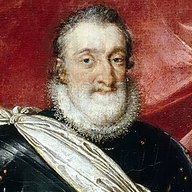 Henry of Navarre to Ségur, 1585–861585–86Three letters of Henry of Navarre to his envoy raising a German army (BnF 500 Colbert 401), listed by Tomokiyo among unsolved ciphers. The key, a homophonic alphabet and a syllable table both in alphabetical order, was recovered from the ciphertext alone by a solver built on that design and checked on matched controls; the three letters are decrypted, with a dozen word signs open. Navarre presses Ségur to conclude with John Casimir and march the reiters at once.
 - key from external plaintext · partial
 Walsingham to Edward Wotton in Scotland, 15851585Four letters of July to September 1585 (Add MS 32657, DECODE R4838–R4840, R4844) in clear English with a two-digit name code. The code was recovered mainly from the glosses in the Calendar of State Papers, Scotland vol. 8 (1914), which calendars two of the letters; the other two are transcribed here. About fourteen words in graphic signs, whose interlinear decipherment was blotted out, have no key.
 - key from adjacent plaintextEdward Wotton from Scotland to Walsingham, 15851585Three despatches listed on DECODE as numerical ciphers are the ambassador’s own drafts in clear English, with one- and two-digit code numbers for persons and places. The drafts were transcribed and the numbers identified from the surrounding cleartext: 19 Arran, 39 the Master of Gray, 10 King James. The calendar of the sent despatches, consulted afterwards, glosses four numbers and gives 24 as Ferniehirst.
- known key appliedParis nunciature despatches, Francia 18, 1585–871585–87Three ciphered despatches of the Paris nunciature on DECODE. Lasry had deciphered R15; R16’s DECODE decryption turned out to be a copy of R15’s, and it was decrypted with Lasry’s key and a nomenclator Meister printed in 1906. R17 was decrypted with Meister’s variable-length key no. 40 of 1587, with a language model choosing how to divide the figures.
- not solved
 “MR” to the Duke of Mercœur, 26 June [1586][1586]A slip in clear French with six cipher runs, 217 symbols of 55 kinds. Lasry’s key for the volume and two other League keys of 1586 share no symbols with it, and a ciphertext-only solver scores the text no better than a shuffled copy; the cipher is not deciphered.
 - key from adjacent plaintext
 Sir Edward Stafford to Walsingham, Paris, 20 August 15861586A clear holograph despatch from Paris with five short cipher runs in the postscript, with no decipherment on the page and not calendared. They were deciphered with Stafford’s letter key, recovered here from a contemporary decipherment and glosses on sibling letters in the same volume (adjacent plaintext). Junius’ son came from Cambrai with papers of his credit with Balagny.
 - existing deciphermentStafford to Walsingham, Paris, 15861586A DECODE record with an unknown recipient is Stafford’s holograph despatch to Walsingham of 19 September 1586, in clear English with four short cipher runs, each deciphered between the lines at the time. The runs were transcribed sign by sign and checked against the glosses: a warning that Guise’s guards were sworn to kill Navarre and Condé.
- existing deciphermentAn anonymous letter to a League leader, 28 October 15861586A League-period letter in a homophonic cipher of two-digit figures (BnF Clairambault 357 f. 167). A complete contemporary decipherment is bound with it: a clear text of the first part on f. 168 and plaintext between the lines of the rest. It was transcribed and checked against Tomokiyo’s partial key, which the check extends; Fumé, vice-admiral of Guyenne, proposes a reconciliation with Navarre.
- key from adjacent plaintextSir Edward Stafford to Walsingham, 9 November 15861586A short clear holograph with one ciphered word of seven signs. It was deciphered as princes with Stafford’s letter key, recovered from a contemporary decipherment and glosses on sibling letters in the same volume; two values come from the word itself. The letter is not calendared in CSP Foreign.
- external key matchedA correspondent at Randan to the Duke of Nevers, 15871587Two letters in clear French to the duc de Nevers, 27 March and 4 April 1587, with seven cipher items, catalogued on DECODE as from an unknown sender at Rome. Key no. 11 of the Nevers key book (BnF fr. 3995), not previously tied to them, was found to fit and applied after a glossed letter in the same hand showed how the writer draws the symbols. All seven items are deciphered; the first letter is dated in cipher “De Randan”, in Auvergne.
- known key applied
 Guise to Mercœur, 16 April 15871587A letter of clear French with 26 cipher runs, probably from Henri, duc de Guise, to his cousin Mercœur (BnF fr. 15564 f. 78). George Lasry recovered the key in 2022 but published only the decipherment of f. 27. His key was applied to a new transcription and extended by about fifteen values: 983 of 998 cipher signs decrypt to sense.
 - known key appliedGuise to Mercœur, May–June 15871587Two League letters to the duc de Mercœur, probably from Guise, on the levies of reiters, Swiss and Italian lances and the Protestant army of 1587 (BnF fr. 15564 ff. 119 and 142). George Lasry’s 2022 key, published without a decipherment of these letters, was applied and extended. 95.1% of 2,477 letter signs decrypt to sense, measured; a dozen name codes stay open.
- key from adjacent plaintextFrancis Needham to Walsingham before Sluys, 28 July 15871587A letter from Leicester’s fleet before Sluys (BL Harley MS 287 ff. 39–40), catalogued on DECODE with no recipient. The key to its three-grid pigpen alphabet was recovered from a few words glossed at the time on the same pages and the alphabetical order of the grids, and every run of f. 39v was deciphered: Parma had closed the channel with hoys and flyboats chained together.
- not solvedNevers to La Vieuville, 30 September 15871587A copy of a clear letter with code numbers and three short cipher runs. Tomokiyo’s Nevers key no. 16 decodes the code numbers (42 et 43, eschevins et maire de ville; 63, La Vieuville). The runs are not deciphered: the only images are a microfilm on which the digits cannot be told apart.
- key from adjacent plaintext · partial
 Lord Cobham at Ostend to Walsingham, 20–22 March 15881588Two letters of the peace commissioner and a Middelburg report (BL Harley MS 287 ff. 70–72), catalogued with no sender or recipient. The cipher is a simple substitution in graphic signs; the key was recovered from the clear English around the cipher runs. Most runs are deciphered: Parma’s new canal to Sluys, a weak garrison, and Cobham’s refusal of “an irreligious peace”.
 - key from adjacent plaintextA court informant to the duc de Nevers, 29 April 15881588A Paris news letter (BnF fr. 3976 f. 62) with nineteen runs in a homophonic cipher of letters and figures and no decipherment. The key was recovered from the interlinear decipherment of the same informant’s letter of 4 June in the same volume, and all nineteen runs were deciphered: Henri III nearly had five or six Paris ligueurs drowned, and Guise answered that he had forty thousand men.
- key from adjacent plaintext · partialLord Cobham to Walsingham, May–June 15881588Four letters from the Bourbourg peace talks (BL Harley MS 287), with cipher passages in Greek-like signs inside clear English. Most of the alphabet was recovered from the contemporary interlinear decipherments of Cobham’s earlier letters in the same volume. The system is polyphonic, and about a third of the cipher words are deciphered.
- key from adjacent plaintextA Paris informant to the Nevers household, 6 and 9 June 15881588Three pages of Paris news three weeks after the Barricades (BnF fr. 3976 ff. 133–134), with eighteen cipher runs and no decipherment. The key recovered for the same informant’s earlier letters was applied, and all eighteen runs were deciphered; his letter of 9 June, which carries a contemporary decipherment, confirms every value.
- known key applied
 Cardinal Morosini to Cardinal Montalto, 1588–891588–89Thirty-six cipher enclosures from the papal legate in France (DECODE R18–R58). The key is the one Meister printed in 1906, which George Lasry identified from his statistical recovery of part of it; because the figures run together in units of one to three digits, the decryption is under-determined and was resolved with a language model of 16th-century Italian. Thirty-four decrypted end to end, two in a second key partial: the Estates of Blois, the murder of the Guises, Henri III’s march on Paris.
 - existing deciphermentPhilip II to Bernardino de Mendoza, 7 September 15891589Two letters in the Spanish general cipher Cg.13 (BnF fr. 3641). The item catalogued as a second cipher letter is the 1589 decipherer’s copy of the first, and both letters have contemporary decipherments in the volume. They were transcribed and aligned with the originals, which rebuilds part of the general cipher and decodes several nomenclator words the decipherers left blank; fourteen code groups stay open.
- known key applied · partialA letter from Reims on the chapter’s postulation, 19 June 15891589Catalogued on DECODE as a 1556 letter to the duc de Guise, this is three pages of continuous cipher from Reims, 1589, on the chapter’s postulation of Brulart and Frison and the Elbeuf ransom. Tomokiyo’s Nevers–Piles table, already matched to the letter by Biermann in 2021, was applied and extended from a deciphered sibling. The decryption is partial: 91.8% of 3,920 signs give sense, measured.
- known key applied · partialA letter from Rome to the abbé d’Orbais, 23 August 15891589A clear letter from Cardinal Pellevé’s household to Jean de Piles with the news of Henri III’s death and fourteen short cipher runs. None of the three keys bound in the volume fits; Tomokiyo’s partial Nevers–Piles table was applied and filled out from a deciphered letter of 1586. The decryption is partial: 75 of 91 cipher signs give sense.
- not a cipherIntercepted letters summarised for Nevers, 15891589BnF fr. 3977 no. 96 is a cleartext French digest of League and Spanish letters intercepted in September and October 1589; the ciphered letters are not in the volume, so the item has no ciphertext. The same volume holds eleven other intercepted ciphered letters of 1589, each with its contemporary decipherment between the lines. They are located, not yet transcribed.
- key from adjacent plaintext · partialChampagne news letters to the duc de Nevers, 1590–911590–93Six letters with cipher in BnF fr. 3623 and 3625. No. 23 is decoded with the name key bound with it; the two-digit homophonic alphabet of nos. 24, 25 and 60 was recovered from a few interlinear glosses and the alphabetical order of its values. Ten of those twelve passages are deciphered in whole or in part. Laurière’s letter of 9 July 1593 is deciphered in full with his own key sheet, Nevers key no. 57, which also reproduces the office’s decipherment of his 13 July letter in a blind test.
- known key applied
 Vincenzo Gonzaga, Duke of Mantua, to Nevers, 15901590An Italian letter to the duc de Nevers with long runs of unseparated two-digit figures, catalogued on DECODE under the wrong sender. The key in Nevers’s papers (BnF fr. 3995 f. 64), which Tomokiyo lists as Mantua’s cipher of 1590, was applied unchanged; 95.1% of the tokens decrypt. Mantua reports the rumour that Sixtus V was poisoned by the Spaniards and assures Henri IV of his devotion; no earlier decipherment was found.
 - ciphertext-only break · partial
 Charles III of Lorraine to Vaudémont, 18 June 15921592BnF fr. 3621 no. 97, listed on DECODE as Non-decrypted, with no key published. A contributor recovered a key from the ciphertext alone; a re-transcription against it showed a reciprocal letter-pair substitution in ordinary cursive letters, with doubling dots, a null and partly syllabic figures. 790 of 1,105 cipher tokens are deciphered (71.5%, partial); special signs and eleven figures are open.
 - not solvedDinteville to the Duke of Nevers, 3 July 15921592DECODE lists a decipherment for R9451, but the leaf has none. A sibling letter on f. 128 in the same symbols has an interlinear decipherment, a crib of about 150 symbols, but it does not fit a key of one symbol per letter; no key was recovered and the letter is not deciphered.
- known key applied · partial
 A. Pelissier to Pierre Jeannin, Burgos, 13 September 15921592Nine pages, mostly in cipher, from the League’s agent at Philip II’s court. Tomokiyo’s key was applied after its look-alike signs were calibrated on Pelissier’s own deciphered letters of October 1592. The decryption is partial: 94% of the ciphered words give sense, with every gap marked; no published decipherment of this letter was found.
 - existing deciphermentHenri IV to André Hurault de Maisse at Venice, 1592–931592–93Four royal despatches in two ciphers (BnF fr. 16093), with no contemporary decipherment on the leaves. Contemporary clear copies of all four in Brienne 13 give the full text. Tomokiyo’s published key decrypts the opening of f. 370 letter for letter as the copy has it, and adds one symbol to his table; f. 406 is the duplicate of f. 404.
- ciphertext-only break · partial
 Thomas Edmondes to Lord Treasurer Burghley, 1593–941593–94Six despatches from Henri IV’s court in BL Stowe MS 166, which DECODE attributes to “Lord Threr?”, the addressee. The ciphered lines are a simple substitution of English in invented symbols; the key was recovered from the ciphertext alone, starting from the words the, of and to. All passages are deciphered except four lines on f. 59; three code symbols for persons are not identified with certainty. Butler’s Edmondes Papers (1913) had already printed five of the six deciphered, which came to light only afterwards.
 - known key applied
 Lebel to Charles Emmanuel I of Savoy, 15931593Three cipher letters of January and March 1593 from Savoy’s agent in Paris during the League’s Estates General (BnF fr. 3983 nos. 11, 62, 100). Satoshi Tomokiyo had published the key and the images but no decipherment of these letters. His key was applied, corrected in about a dozen letter signs and extended with code values from glossed sibling letters; about 98% of the enciphered tokens have a value.
 - known key applied · partialSpanish despatches of 1593: Miranda, Sessa, Ibarra1593Four Spanish despatches of 1593 in two syllabic numerical ciphers (BnF fr. 3983 nos. 45, 79; fr. 3984 nos. 47, 68), with no published decipherment. Tomokiyo’s reconstructed keys lacked the code list; the Spanish office’s own key, found through DECODE in BnF fr. 3995 f. 97, supplied it. Nos. 45 and 79 are deciphered across every cipher line, no. 47 in part; no. 68 decrypts only to syllables, its code list unknown.
- known key applied · partialNevers to Pisany and Revol, 15931593Seven ciphered copies of the duc de Nevers’ letters from his 1593 embassy to Rome for Henri IV’s absolution. Tomokiyo’s numerical key no. 46, transcribed at full resolution and checked on a letter deciphered by the office, was applied: it deciphers the two letters to Pisany, one completely and one in long stretches. The five letters to Revol are in the Court’s symbol cipher no. 60 and are not deciphered.
- not a cipherShippen’s shorthand notes on Dee17th c.Twenty-five DECODE records from Sloane MS 3188, catalogued as ciphertexts with no decipherment, are a 17th-century reader’s notes on John Dee’s spirit diaries and writings. They are in English stroke shorthand with names and dates in longhand. Not a cipher; the shorthand system is not yet identified.
- not solvedThe duc de Nevers to Villeroy, 16 August 15951595Nevers’s file copy of a letter from Saint-Quentin during the siege of Cambrai, with seventeen passages (753 symbols) in a cipher of figures and graphic signs and no contemporary decipherment. Every surviving Nevers key of 1594–95 was tested and none fits. A ciphertext-only solver that recovers a matched control finds no French, so the cipher is not a plain homophonic substitution; not solved without the key.
- ciphertext-only breakMatheo de Segura to the Constable of Castile, 8 August 15961596Two short cipher passages in a mostly clear Spanish letter, BnF espagnol 336 no. 99, which Tomokiyo lists as undeciphered. The key of this homophonic cipher was recovered from the ciphertext alone after joined signs were separated in transcription. Every symbol has a proposed value, six of them tentative: a report that the world would end or the king die around September, after a comet.
- key from adjacent plaintext · partial
 Henri IV to Philippe de Béthune, November 16011601Three letters of Henri IV to his ambassador in Rome (BnF fr. 3484) with no decipherment. The key was recovered by aligning the 10 November letter with its clear minute in the same volume and with marginal decipherments of other letters; that letter is deciphered in full. The 22 November letter is transcribed with its cipher runs decrypted in fragments, and the 9 November letter is decrypted at about six words in ten, the limit its transcription allows.
 - existing deciphermentHenri IV to Savary de Brèves at Constantinople, 16031603Twelve ciphered royal letters to the ambassador at the Porte (BnF fr. 3541), listed with no known decipherment. Their text was printed by Berger de Xivrey in 1853 from a contemporary clear copy, three in full and nine as summaries, and the office key survives in BnF fr. 3462 f. 103. The ciphertext is not online, so the letters have not been decrypted with the key.
- known key applied
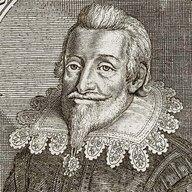 Henri IV to Landgrave Maurice of Hesse-Kassel, 1602–16091602–09Rommel printed the King’s ciphered passages in figures in 1840 and the key in 1846, but applied it to one letter only. The key was applied here to about 4,100 groups in seven letters, with its misplaced list entries corrected from the texts. The passages give Henri IV’s plan of a German Protestant and Dutch front against Spain, 1604–1606.
 - key from adjacent plaintextThe inscriptions of the Chymische Hochzeit, 16161616DECODE R4502, catalogued as a cipher letter of Andreae, is the printed Rosicrucian novel. Its two long inscriptions are simple substitutions in an invented alphabet that the novel itself gives in clear, and English editions have printed them since 1690. The symbol table was recovered here from those glosses; the two other lines are symbolic dates.
- key from external plaintextCipher note in a Rosicrucian book of 1618, Zurich1618 volume; note undatedFive lines of alchemical German in a simple substitution of 19 graphic signs, before the title page of the Speculum sophicum rhodo-stauroticum (Zurich SCH R 201, DECODE R4817). Anne-Simone Rous’s partial decipherment (published 2023) was used as a crib, and the key was completed and corrected against the image. All 79 signs have a value; one letter needs an emendation.
- ciphertext-only break
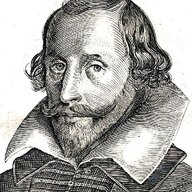
 Ferdinand of Bavaria to Maximilian I, Bonn, 22 December 16191619DECODE R9426, ten pages of figures in the Bavarian key-book, catalogued with no sender or recipient. The key, a homophonic substitution on even two-digit figures, was recovered from the ciphertext alone and checked unchanged on the sibling letter R9425. 95.8% of the cipher tokens give sense: the Elector of Cologne on quartering and paying the Catholic League’s troops; 31 of 32 nomenclator groups are open.
 - known key applied
 Cornelis Haga at Constantinople to the States General, 16201620Two ciphered despatches of the first Dutch ambassador at the Porte, listed on DECODE as non-decrypted (R2113, R2115). The key filed in the same archival series, DECODE R2118, a simple substitution with a numbered nomenclator, was applied; the one alphabet letter cut off in its photograph was recovered from the text. The records hold four letters, bound out of order, with Haga’s advice on the Bohemian revolt and the Porte’s questions about the truce with Spain.
 - known key applied · partialA codebreaker’s file: TNA SP 106/10, c. 1623–16241623–24Seven records catalogued as separate anonymous ciphertexts are one English codebreaker’s working file on Italian intercepts, with his interlinear glosses and worksheets. His key sheet (DECODE R725) and his grid of the three-figure code (R658) were transcribed and applied; the key’s vocabulary dates the file to 1623–24. The three-figure code is deciphered in fragments; the other letters and the correspondents stay open.
- existing deciphermentHerbault to Béthune, 13 February 16261626The one letter in a series of about thirty (BnF fr. 3669 no. 25) catalogued without a decipherment. No. 26 is the same despatch with a contemporary interlinear decipherment, and the text was transcribed from it. It covers the Valtelline, the reason for the Huguenot peace, and Savoy’s push to draw France into war with Spain.
- ciphertext-only breakFrom Warsaw, 24 December 16271627A one-page Italian cipher letter in the Vienna key files (DECODE R1408), with no decipherment on record. The key was recovered from the ciphertext alone; it is not a hard cipher, a homophonic substitution with at most two symbols per letter and the alphabet in plain order on the figures. Every spelled word is decrypted: an agent reminds his patron of a canonry of Olmütz promised to a son of the Queen of Poland.
- known key appliedSir Ralph Boswell to William Boswell, December 16271627–28A ten-line letter in invented signs, catalogued as Charles I to William Boswell, 1628 (TNA SP 106/5, DECODE R413). Mark Woodard recovered the simple substitution key and deciphered it on DECODE in 2021: court news of Buckingham’s return from Plymouth. His key was checked and applied here; three open signs are filled, and the sender and the date, 15 December 1627, are identified from the endorsement.
- key from external plaintextVenetian ambassador at Rome to the Doge, 16281628A despatch of 29 April 1628 (ASVe Busta 27, DECODE R1862) in a numerical syllabary with word codes. The key was recovered by aligning another letter in the same cipher, R1874, with its contemporary decipherment, then applied here and extended from context; 0.95 of the text gives sense. Cardinal Barberini asks about Palmanova and the Pontebba pass, and the ambassador urges the Pope to go as legate.
- existing decipherment
 Alvise Mocenigo to the Doge and Senate, Madrid, 26 October 16281628A Venetian despatch in a numerical syllabic cipher, catalogued on DECODE (R1874) with sender, recipient and date unknown. The record’s own images hold the chancery’s complete contemporary decipherment, which was transcribed and checked against the cipher by paragraph marks and one repeated group run. Attempts to recover the key from the ciphertext failed, and it was not rebuilt.
 - key from adjacent plaintext
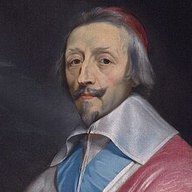 Cardinal Richelieu to Denis Bouthillier de Rancé, 16291629Two letters of July 1629 (BnF Français 3829) in a homophonic cipher with a doubling mark and a small nomenclator. The key was recovered from cribs beside the clear words of the same letters. Avenel had printed the decipherment in 1858, found only afterwards; the two agree word for word.
 - known key applied

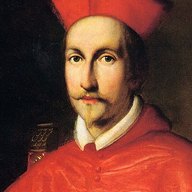 Giovanni Battista Pallotto to Francesco Barberini, 16291629Twenty-eight ciphered passages in the register of the nuncio at Vienna (BAV Barb.lat. 6960, DECODE R286–R313). Their contents were printed in 1897 from the Roman decipherments. The key is Biermann and Bosbach’s of 2018 for the sibling volume 6956, which George Lasry found also fits 6960; applied here, it gives running Italian in every record, with about 1,750 code groups open. Earlier attacks made before the key was known are recorded.
 - key from adjacent plaintext · partial
 Riksarkivet cipher letters, 1628–16331628–33Fourteen DECODE records catalogued as one Latin cipher are four unrelated groups. The archbishop of Bremen’s two letters of 1631 use a homophonic cipher of two-digit figures laid out on an alphabet grid; the key was recovered from a contemporary interlinear decipherment and both letters are deciphered in full. Three other ciphertexts were attempted and not solved.
 - known key applied · partialFrancesco Barberini to Nuncio Ceva, 16321632Two ciphered despatches of 1632 from the Francia 346 dossier (DECODE R75, R84) that George Lasry, who reconstructed the dossier’s key in 2020, had not deciphered. His variable-length key was applied, with a language model choosing among divisions of the unseparated digit stream; the result agrees with R75’s partial 1632 interlinear decipherment on 77.5% of letters. Six nomenclator values were added; 117 elements stay open.
- key from adjacent plaintext
 Lord Maltravers to the Earl of Ormonde, 1634–351634–35Two letters printed by the HMC in 1895 with 59 figures of a numerical cipher and no decipherment. The key was recovered from the adjacent cleartext: a regular alphabet in blocks of three consecutive figures (consonants from 7, vowels from 64), nulls 91–111 and a small nomenclator. Seven of the nine code numbers were identified from Wentworth’s dispatches in Knowler’s Strafforde’s Letters (1739).
 - ciphertext-only breakSir Simonds D’Ewes, cipher log of his son’s fits, 1635–361635–36BL Harley MS 286 f. 61, catalogued on DECODE as a letter of an unknown sender, is D’Ewes’s private Latin log of his infant son’s convulsion fits, in the alphabet he invented at school. The key of this simple substitution was recovered from the slip alone, from probable words, and checked against weekdays, moon phases and his Autobiography. 96.5% of the words are deciphered.
- ciphertext-only breakCipher report to Hesse-Kassel, Thirty Years’ War1635–52DECODE R4500, a German report in the Hesse-Kassel cipher files at Marburg, ends in fourteen lines of digits and symbols. The key was recovered from the ciphertext alone and checked against a contemporary decipherment of the first four lines. About 97% of the symbols are deciphered: the writer has laid the matter before the Emperor and the Elector of Bavaria and asks to be held excused.
- not solvedRohan papers and the Franco-Dutch letters, 1635–361635–36Two letters of 1635 in BnF fr. 3758 (Louis XIII to Châtillon and Brézé; Châtillon to Servien) mix clear French with enciphered passages. The clear text was transcribed; the ciphered passages were not deciphered, since no key or matching plaintext was found. The printed decipherments of the Savoy and Canisy letters to Rohan could serve as known plaintext, but their ciphertext lies beyond the end of the Gallica reproduction.
- ciphertext-only break · partial
 Otto von der Malsburg’s cipher letters to Landgrave Wilhelm V, 16371637Ten letters of January to March 1637 from Hesse-Kassel’s general war commissary in Westphalia, catalogued on HCPortal as unsolved. No key survives among the Hesse-Kassel key sheets; the homophonic two-digit table was recovered from the ciphertext alone, with digraph signs and a small code. 95.9% of 9,736 cipher groups decipher: unpaid garrisons, Ehrenbreitstein, the refused safe-conducts for the Cologne peace talks, the Dutch alliance. A second cipher in letters on f. 12 and about forty codes stay open.
 - known key applied
 Sigismund Heusner von Wandersleben to Axel Oxenstierna, 16371637A German letter in a numerical homophonic cipher with code numbers, catalogued twice on DECODE (R4332, R3816: the same scans). Michelle Waldispühl and Nils Kopal recovered the key and published the decipherment in 2024. Their key was applied here to a fresh transcription of one page and reproduces their plaintext; the date is 15 May 1637.
 - key from adjacent plaintext · partial
 Kurz von Senftenau to Trauttmansdorff, Hamburg 16391639Nine letters of the imperial vice-chancellor during the Westphalian preliminaries, in a homophonic cipher with a regular table of consonant–vowel syllables. The key was recovered from a contemporary interlinear decipherment on one page, as Mírka had done in 2012 without printing it, and all nine letters are deciphered in part; the gaps are transcription.
 - key from adjacent plaintext · partial
 Johan Banér to Torsten Stålhandske, Hof, 29 December 16401640A copy of an intercepted field letter from Banér at Hof, days before his winter march on Regensburg, kept in Kircher’s correspondence (APUG 568 f. 239); posted on Cipherbrain in 2019, where the attempts failed. No Swedish key on DECODE fits; the key of the homophonic cipher in two-digit figures was recovered from cribs in the adjacent clear German (durch, und). 246 of 274 cipher figures decrypt (89.8%); a courier’s name, one corrupt stretch of the copy and fourteen code groups remain open.
 - external key matched · partialRobert Reade to his cousin, Paris, 19 April 16411641A clear letter with two cipher passages, catalogued on DECODE with writer and recipient unknown; the signature and endorsement identify Robert Reade, Secretary Windebank’s nephew, writing from the exiled household. The Deciphering Branch’s reconstruction of the Windebank cipher (DECODE R9115), filed in another volume, was found to fit; with 8 values rebuilt here, 93% of the significant groups are deciphered. The passages weigh whether Windebank can safely return under a summons.
- known key applied
 Charles I and Nicholas to Boswell, 2 November 16431643Two cipher letters sent through Sir William Boswell at The Hague (TNA SP 84/157 ff. 217, 219): the King’s re-credentials to the Duke of Courland’s envoy and Secretary Nicholas’s covering letter. Robert Pitt’s published alphabet for this homophonic numerical cipher was checked with a permutation control and applied; the four graphic signs are word signs. Both letters are decrypted except about a dozen code groups that occur once.
 - key from external plaintext
 Fra Giovanni di Lucca to Ferdinand III, 16441644A 231-figure Italian cipher paragraph in a friar’s letter to the Emperor (DECODE R2159), a substitution with two figures for each vowel. The key was recovered using the opening words Tomokiyo had published as a crib, and every figure was decrypted; checked against the manuscript, the apparent polyphony turned out to be ten misread 4s and three encipherment slips. The Grand Hetman Koniecpolski offers to keep the Turk from Rákóczi, raise Moldavia against him and give two thousand Cossacks.
 - known key appliedSir Richard Forster, cipher passage of 13 May 16441644A 207-token passage in a homophonic substitution of 34 symbols, already deciphered by Lasry, Biermann and Pitt. Pitt’s key was checked with a permutation control and then recovered from the ciphertext alone (31 of 34 symbols). Matched controls show why the obvious 5-gram attack fails until the model writes u for v and i for j.
- external key matched
 Charles I to Prince Rupert, Oxford, 29 April 16451645A holograph letter of Charles I, listed on DECODE with no decryption. George Lasry’s reconstruction of the King’s cipher with the Queen (DECODE R929), made for other letters, was found to fit and applied unchanged; about twenty code groups stay open. The King cannot move his artillery train without horses and asks Rupert to march and fetch it, the march that ended at Naseby.
 - known key applied
 Henrietta Maria’s household to Charles I, 1645–461645–46Six cipher letters from the queen’s circle at St Germain and Paris (TNA SP 106/10, DECODE R785–R929), in homophonic numerical ciphers with a nomenclator. George Lasry reconstructed the keys and deciphered the whole run on DECODE in 2020. His key was applied here to one raw transcription as a check; nothing about the text is new.
 - known key applied

 The prince de Conti’s ciphered mémoires, March 16491649Nos. 41 and 42 (BnF fr. 3854) had been deciphered by George Lasry in 2023; they were transcribed again and decrypted with his polyphonic key, with three small corrections to his text. No. 43 is a different system, a syllabic number code whose contemporary interlinear decipherment omits the first twelve lines. The key was rebuilt from the glosses and those 264 groups were deciphered: Conti to Laigue, 5 March 1649, on the Rueil conference.
 - ciphertext-only break · partialA French letter in a homophonic pigpen cipher, SP 106/1017th c.TNA SP 106/10 ff. 241–243 (DECODE R927), catalogued as an undeciphered letter in the masonic alphabet. The pencilled pigpen key on its flap does not fit; the cipher is homophonic, and its key was recovered from the ciphertext alone after a hand transcription of the last page. That page, a client’s letter to a patron, is deciphered almost in full; the first page only in fragments.
- known key applied · partial
 Urquhart’s Cyphral Octastich (1652) and Distich (1653)1652The octastich is a book cipher on Urquhart’s own Jewel: the k-th number points to the first word with the needed initial on page k. The rule, published by Vals AI in August 2026, was applied to a fresh transcription and tested without the plaintext (238 of 284 first-occurrence hits against 0.43 for controls); all but ten letters are decrypted. The rule claimed for the distich does not reproduce.
 - not solved
 Guidi di Bagno to the Secretariat of State, 5 January 16521652A papal nuncio’s despatch from Paris during the Fronde: four pages of unseparated figures (DECODE R5622). The Francia 346 key of 1632 was tested and does not fit its structure, and no key, clear copy or decipherment was found. The OCR transcription was too noisy to use; not solved.
 - not solved
 Two letters in Abraham Cowley’s hand, Paris, 1652–531652–53DECODE’s “Mr. Conleys Hand” is a misreading of the docket “mr Cowleys Hand”: a fair copy of two royalist letters from the Queen’s court at Paris, in clear English with 23 code numbers. The clear text was transcribed. The numbers are too few to recover a key from, the Hyde–Barwick key does not fit, and they were not decoded.
 - external key matchedBordeaux to Brienne, London, 30 May 16531653A despatch of the French envoy intercepted by Thurloe, with no decipherment on the leaf. A ciphertext-only solver failed on the provisional transcription; the English Deciphering Branch’s key sheet for “Mr. Bordeaux” (DECODE R7537), filed in a separate volume, was found to fit and applied after the transcription was corrected against the images. The letter is deciphered except about twenty tokens: the Council heard the rebel Bordeaux deputies before the French envoy.
- not a cipher
 Hyde’s ciphered superscriptions to Barwick, 1659–601659–60The lines of figures written as superscriptions on four of Hyde’s letters to John Barwick are nulls. The 1724 editor of Barwick’s Life says so, and applying the full Hyde–Barwick key from the 1721 plate confirms it: one line decrypts to nonsense and the others use numbers outside the key.
 - ciphertext-only break
 Ferenc Wesselényi to Leopold I, c. 1663–64c. 1663–64A Latin draft of the Palatine of Hungary with sixteen runs of numbers: a reversed alphabet with vowel homophones. The key was recovered from the ciphertext alone and later matched DECODE key R672; 241 of 244 cipher tokens give sense, and two code numbers stay open.
 - not a cipherStojan’s letter from prison1664–68DECODE R688, catalogued as a substitution in graphic signs, is a cleartext letter in Serbian written in Cyrillic: a prisoner named Stojan begs aghas, knezes and his kin to get him out of a Habsburg prison. Not a cipher; the letter was transcribed, with about a quarter of the words doubtful.
- known key appliedThe Conde de Hernán Núñez to Baltasar de Fuenmayor, December 16741674Four despatches from the Spanish envoy at Stockholm, each cipher passage with a contemporary decipherment in the margin (Brussels SEG 2559, DECODE R1012–R1015). The syllabic nomenclator key rebuilt earlier for the Balbases letters in the same volume was applied unchanged; it confirms the margins and supplies their illegible words, giving values to all but one of 1,716 groups. Sweden on the eve of the Scanian War.
- known key applied · partial
 Bernardo de Salinas and Pedro Ronquillo to Baltasar de Fuenmayor, 1676–781676–78Twenty cipher letters from the Spanish envoys in London and at Nijmegen (Brussels SEG 2559, DECODE R966–R984, R1001). The Balbases 1677 key, from the same volume, was applied unchanged: 88% of 23,463 groups decrypted, and the sixteen contemporary marginal decipherments confirmed. The four letters with no decipherment are decrypted in gist; the residue is mostly transcription noise.
 - key from adjacent plaintextThe marqués de los Balbases to Baltasar de Fuenmayor, 1677–781677–78Fourteen ciphered letters from Spain’s plenipotentiary at the Nijmegen congress to its envoy in Denmark. Ten carry a contemporary decipherment in the margin, four carry none, and no key survives. The syllabic nomenclator was recovered by aligning the ten margins with their cipher, and it decrypts the four letters without one, down to the loss of Ghent in March 1678.
- key from adjacent plaintext
 The Marqués del Carpio to Baltasar de Fuenmayor, 16771677Ten ciphered letters from Spain’s ambassador in Rome to its envoy in Denmark, with contemporary decipherments in the margin and no key; DECODE lists two as not decrypted. The syllabic nomenclator was recovered by aligning the 4 September letter with its margin, and applied to all ten; the two “not decrypted” letters also carry a faint margin decipherment, which agrees with the key’s output.
 - existing deciphermentA Wallachian postscript against Antide Dunod, after 1688after 1688A Latin “encrypted letter” in the Szembek papers at Kórnik, catalogued as an 18th-century letter to the Szembeks, is the postscript of a letter from the Wallachian court written after the death of Prince Şerban Cantacuzino in October 1688. Every two-digit cipher run was glossed at the time; the key rebuilt from the glosses (22 numbers, no conflicts) reproduces them. It denounces the imperial Jesuit envoy Antide Dunod as the man who misled the late prince.
- key from external plaintext
 Feuquières to Catinat, Pignerol 16911691A 418-group despatch printed in figures in the 1819 Mémoires de Catinat, in the petit chiffre of the Pignerol governors. The code was recovered by aligning another letter in it, printed in the same edition with its contemporary translation, and carrying the values between the two letters; 586 of 601 groups have a value. The plan for the surprise of Veillane. Bazeries deciphered it in 1893 but did not publish the text.
 - known key applied
 Louis XIV and Louvois to Catinat, July–September 16911691Seven despatches printed as code groups in the 1819 Mémoires de Catinat, in the Grand Chiffre, a two-part code. Bazeries’ 1893 table was applied unchanged to the OCR’d groups and decodes all seven; his clear texts of two letters agree at 98 and 99%. The longest is the King’s decision of 14 September 1691 to abandon Piedmont.
 - existing decipherment
 Letters to Jobst Hermann von Ilten, 1697–17061697–1706Four Hanoverian cipher letters in the Ilten papers at Hanover, catalogued here as not deciphered. Kalliope in fact calls each one a Dechiffrierter Brief, and every code run carries its decipherment, written over it in Ilten’s office. The letters were transcribed and every gloss was checked against its group’s other occurrences. They cover Kolbe and Barfus at Berlin in 1697 and the Prussian marriage of Sophia Dorothea in 1705–06.
 - known key applied
 Robert Yard to the Earl of Manchester, 12 and 16 October 16991699Two letters from Whitehall to the ambassador at Paris (Yale, Beinecke OSB MSS fc37), catalogued as undeciphered, that is, with no decipherment written on them. The key is in the same Manchester papers, a printed one-part code with THE = 454; checked on a sibling letter deciphered at the time, it decodes both letters in full. Messengers at Dover, a design at Saint-Germain, a letter opened at the post office.
 - not a cipherA thank-you note for lessons in cipher1702–23Add MS 61575 f. 95, catalogued on DECODE as a numerical cipher of a Prussian king, holds no numbers. It is seven lines of cleartext French, spelled by ear, thanking someone for teaching the writer to write in cipher. Transcribed in full; writer and recipient unidentified.
- external key matchedAndrás Bay to Rákóczi, Jászvásár, 8 March 17061706A despatch from the Moldavian court, listed on DECODE with no decryption and no key. Decrypting it with each of the 94 Rákóczi chancery keys on DECODE and scoring the output as Hungarian picked the syllabic key R609, which was applied unchanged. 97.6% of the groups decipher as sense: Muscovite and Polish envoys, the Tsar seeking peace with Charles XII, and the Swedes at Vilna.
- known key applied · partial
 János Pápai to Ferenc Rákóczi II, 1706–17101706–10Eleven numeric despatches of Rákóczi’s envoy at the Porte, five of them filed under other senders, decrypted with the Hungarian syllabic nomenclator issued to him (DECODE R580), which DECODE had not linked to them: 99.7% of 16,698 groups. A twelfth letter hides six passages in graphic signs, which are not deciphered.
 - external key matched · partialPhilippe Groffey (?) to Ferenc Rákóczi II, 15 October 17071707Catalogued as a letter of Rákóczi, DECODE R902 is an unsigned French report to him. The key DECODE R639, a separate record not tied to it, was found to fit by scoring the G15 keys and applied to DECODE’s digit transcription, giving values for 92.1% of the groups. The subject is clear (Ráday’s approach to Rehnskiöld, the Swedish and Polish courts); a word-for-word text needs a fresh transcription.
- external key matchedFour letters to and from Ferenc Rákóczi II, 1706–17111706–11Four DECODE records catalogued as Rákóczi’s. Three are French reports to him: two were deciphered (97% of groups) with the Bonac–Groffey key DECODE R639, corrected from its image, and one has its own contemporary clear copy. The fourth, Rákóczi’s Latin letter from Lwów of 27 June 1711, has a complete interlinear decipherment, from which its 224-code syllabic key was rebuilt.
- existing deciphermentMihály Hentér to Ferenc Rákóczi II, 8 July 17071707A letter from Rákóczi’s envoy at the Porte in a simple substitution (DECODE R496), catalogued with no decipherment and a placeholder date. A contemporary Hungarian decipherment is written between the lines; it was transcribed and checked against key values fixed from two sibling letters. About a fifth of the interlinear text stays uncertain where the hand overlaps the cipher.
- not solvedNicolas Desmarets to an unnamed correspondent, Marly, 4 June 17101710A letter whose lines of French about the Geertruidenberg peace talks alternate with lines of a numerical code. Four alignment models show that the French is cleartext, not a decipherment of the figures. The code (471 groups) has no key on DECODE or in print and was not decoded.
- existing decipherment

 Queen Anne’s instructions to the Earl of Peterborough, 22 February 17121712Signed instructions in clear English with 61 runs of a numerical code with nulls (BL Add MS 4107, DECODE R4878), listed with no decipherment. No key on DECODE fits; the full text is printed from the office draft in Parke’s Bolingbroke correspondence (1798), and every code run was matched to it. The coded passages concern a secret errand to keep the Electoral Prince of Saxony Protestant.
 - ciphertext-only break · partialBarbara Potocka and Józef Mniszech to Jakub Dunin, 1714–161714–16 / undatedTen letters in the Sanguszko archive. The homophonic numerical alphabet of Potocka’s nine letters was recovered from the ciphertext alone, starting from a Polish postscript, and gives values to 97% of her cipher tokens. Mniszech’s letter uses another system and is not decrypted.
- known key appliedThe Secretariat of State to the Nuncio in Spain, 1718–17201718–20Twenty-four cipher despatches of Clement XI’s Secretariat to Madrid (ASV Spagna 364D, DECODE R154–R177). George Lasry reconstructed the key in 2020 and his decipherment is filed on every record; measured here, it gives values to 97.6% of cipher tokens. Sixty-one of the 189 nomenclator groups without a value are recovered from the key’s alphabetical order and the contexts.
- not solvedParis 1719 and Carré 1742–45 code letters, BL Add MS 323051719–45A codebreaker’s file of intercepts: most records were deciphered at the time. The Paris letters of February 1719 and the three letters to Mr Carré in Pall Mall, 1742–45, are in two-part codes. The Carré letters were transcribed (1,323 groups) and tested, but neither key can be recovered from this little ciphertext, and neither code was decoded.
- known key applied
 Charles VI to Count Windischgrätz, 1720–17221720–22Four autograph letters of the Emperor to his envoy at The Hague, catalogued on DECODE with no decipherment. The two keys named on the records (R5017, R5018) were transcribed and applied, with two key slips corrected, and every cipher passage decrypts. Alberoni’s fall, the fear of a French separate peace with Philip V, Sardinia for Lorraine, and a Spanish marriage proposal for the Emperor’s children.
 - known key appliedA cipher slip from Brussels to the Cologne nunciature, 17211721An unsigned slip of figures in the Cologne nunciature archive, catalogued with sender and contents unknown. George Lasry’s key and Paolo Bonavoglia’s decipherment were already on the DECODE record; the key was applied again, checked against the image, and three values added from context. 182 of the 189 tokens have a value.
- known key applied · partialA letter between the Windischgrätz brothers, Brussels 17211721A German family letter with thirteen enciphered passages about the Congress of Cambrai and the succession. Jakub Mírka’s reconstructed key, attached to the DECODE record, was applied unchanged; 148 of the 181 cipher groups (82%) decrypt. 23 nomenclator codes stay open, fixed by neither the key nor the letter.
- not a cipherKey to the Visconti Italian cipher, 17271727DECODE R7931, catalogued as a ciphered letter of Count Visconti, is the Deciphering Branch’s reconstructed key for his Brussels–London correspondence: a numerical nomenclator of 300 places, 193 filled. There is no ciphertext on the leaf; the key table is transcribed.
- not solved
 Palm to Starhemberg and Visconti, 17271727A German letter of the Emperor’s resident in London with fourteen passages in a homophonic cipher with a small nomenclator, a few groups glossed at the time. The key filed beside it belongs to Windischgrätz and contradicts the glosses. A ciphertext-only solver failed on 162 letter tokens, and a matched control shows the text is too short; not deciphered.
 - not solvedA cipher page of 1728 in invented symbols, BL Add MS 322871728One page of 205 invented cursive symbols, filed with a contemporary codebreaker’s frequency counts and a docket of August 1728. The symbols were transcribed and match his tally. The flat index of coincidence excludes simple substitution, and Vigenère, Beaufort and Quagmire-type searches failed; the key was not recovered.
- not applicableInstructions for the Stosch–Walton cipher, c. 1731c. 1731SP 106/7 f. 33 (DECODE R597), catalogued as a partly decrypted letter, is an English instruction sheet for a syllabic code in two keys, used with Baron Stosch, the British spy at Rome and Florence. The syllable is written over every group of its worked example, and the whole sheet is transcribed.
- known key appliedThe Secretariat of State to the nunciature in Spain, 17361736Eleven despatches to Madrid during the 1736 rupture over Spanish recruiting in Rome. George Lasry recovered the key and deciphered them in 2020 but left all 166 four-digit code groups without a value. 46 were recovered here from context, raising the share of the text with a value from 90.6 to 95.3 per cent.
- external key matchedLondon to Johann Georg von Ilten, 17431743Two letters from London to a Hanoverian general in the Low Countries, with French passages in a numeric code. One carries no decipherment. The code table, 863 numbered groups, was filed in a later volume of the same Ilten papers, and it reads both letters: orders to eat the forage so the French find none, and an extract of the instructions to Lord Stair.
- not solved
 Military news in code for the Prince of Waldeck, 17441744Two pages of three-digit code sent to Prince Carl August Friedrich of Waldeck, an Imperial and Dutch general, and dated by his French draft reply on the back to 18 January 1744. The 717 groups belong to a two-part homophonic nomenclator with no surviving key. Tested on synthetic letters of the same size and design, the language model rates wrong keys above the true one, so the letter was not deciphered.
 - existing decipherment
 Frederick II to Louis Michell, 28 December 17511751A Prussian letter in a numerical nomenclator, intercepted and copied at The Hague (DECODE R1957), listed with no decipherment. Its clear opening, its length and the positions of six repeated code groups identify it as no. 5263 of the Politische Correspondenz (1882), printed from the King’s minute; the text is taken from that print and the code was not rebuilt. The sibling R1955 is not decrypted.
 - not solvedHellen’s intercepted letters to Frederick II, 1752–17631752–63Intercepted despatches of the Prussian envoy at The Hague, in numerical nomenclators. The DECODE transcriptions were audited and corrected; no key was recovered and no enciphered passage was decoded. Digitised decipherments of Hellen letters of 1752–53 in Fagel 5206 are an untested lead.
- not a cipherSchaeblin to Mr Jones, The Hague, 17531753DECODE R9218, catalogued as a numerical nomenclator letter, is a cleartext English letter from C. Ben. Schaeblin to Mr Jones about compiling a new French cipher of 3000 numbers, with ways to disguise the groups. The only figures are his worked examples. Transcribed in full.
- ciphertext-only breakJohann Heinrich Kauderbach’s despatches from The Hague, 1754–561754–56Ten Saxon despatches copied by the Dutch interceptors, in unseparated figures that the Stadtholder’s cabinet could not decipher. Two digits were identified as nulls and the rest divided into two-figure codes; the key was recovered from the ciphertext alone by assigning the codes to the letters and syllables of Kauderbach’s 1761 key. All ten letters decrypt, 65–97% per letter.
- key from adjacent plaintext · partial
 The comte d’Affry’s intercepted letters from The Hague, 1757–581757–58Eleven code letters of the French ambassador to Rouillé and Bernis in the Dutch royal archives, listed on DECODE as not decrypted. The Dutch codebreaker Lyonet’s decipherments of eight sibling letters are among the images; aligning them with their cipher recovered 651 groups of the code, which decrypt nine of the letters (86% of groups overall). The eleventh letter, to Vienna, is in another code.
 - not a cipherMr Eichel’s cipher sheet, 17581758A sheet of 139 number groups docketed ‘Cypher from Mr Eichel 1758 / Prussia’ carries no message. A key in the same volume, R596, found by scoring the SP 106 keys, declares its own nulls: under its rules 117 groups are nulls and 21 of the other 22 fall on cells the key leaves blank.
- ciphertext-only break
 Gottfried van Swieten to Count Cobenzl, 1757–591757–59Three despatches from Bonn in a numerical syllabary. The 1757 letter has a contemporary decipherment on the page; the key of the two 1759 letters was recovered from the ciphertext alone, by a solver that keeps the table in alphabetical order. 96% of the 1759 groups decrypt; about 21 groups, mostly names, stay open.
 - known key appliedNuncio Acciaiuoli from Lisbon, 1758–601758–60Eight cipher leaves from the papal nuncio in Lisbon. George Lasry’s key and letter-by-letter decryption were on DECODE; here the text was divided into Italian words and 25 code groups fixed from three leaves deciphered at the time. The first leaf is the nuncio’s secret account of the attempt on King José I in September 1758.
- existing deciphermentSebastiano Foscarini to the Doge and Senate, 13 October 17611761A Venetian despatch from the Escorial in a numerical cipher, catalogued on DECODE (R1875) with sender and recipient unknown. The chancery wrote a complete contemporary decipherment on the despatch and barred the cipher; the text was transcribed from it, and the key was not rebuilt. It reports Madrid’s view of the broken-off Anglo-French peace talks and the talk of a union with another court: the Family Compact with France, signed in secret that August.
- known key applied
 Nuncio Lucini from Madrid, 13 October 17671767A clear letter whose last sentence is in figures. George Lasry’s key for the series was on the DECODE record, but no decipherment of this passage was found; it was applied with one value corrected and five code groups added. The nuncio thinks Charles III’s demand to try clergy before lay judges aims at the internal unrest of the monarchy.
 - external key matched
 De Swart to Van Bleiswijk, St Petersburg, 17821782A Dutch despatch in a three-digit code with marked digits, whose codebook DECODE could not identify. It is the 1765 Croiset codebook of the Russia legation (DECODE R1038); with 34 values from context and 41 entries transcribed from the key scans, 96.7% of the 1,719 groups decode. The Austro-Russian mediation, Catherine II’s Greek project and Prussia’s accession to the Armed Neutrality.
 - existing deciphermentRechteren to the Griffier, St Petersburg 17851785A letter of the Dutch envoy in St Petersburg in a numerical nomenclator (DECODE R1039). The Griffie’s complete contemporary decipherment is filed on the same record; it was transcribed and tied to the cipher line by line. The key was not recovered; the pair is a known-plaintext sample for De Swart’s 1787 letter.
- known key applied · partial
 Van Reede from Berlin, 1787–17931787–93Two French despatches of the Dutch envoy decode with William V’s 1782 Grand Chiffre (DECODE R1024), checked on a control letter with known plaintext; digits the DECODE transcription could not place were resolved with a French language model. They report the Prussian refusal to guarantee the Dutch possessions overseas. The 1793 letter is in another code and was not decoded.
 - not solvedVan Dedem at Constantinople, 1788–17991788–1799Four ciphered despatches of the Dutch ambassador to the Porte. R2120 was deciphered at the time: its clear decipherment is filed as R2121 and concerns an Ottoman loan. The letters of 1789 and 1793 use a heavily homophonic word code with no surviving key; alignment with three deciphered siblings gave no consistent values, and they were not decoded.
- known key applied
 Van Reede to William V, 17921792One page in William V’s Grand Chiffre, decoded in full with the known key (DECODE R1024) and checked against a contemporary gloss over its first eight lines. It is a cover note: the real despatch is in lemon juice on the blank half-pages of the enclosure, and the last 21 figures are declared nulls.
 - external key matched · partial
 Prince Frederick of Orange to his brother, London, 7 May 17951795A four-page letter listed on DECODE with no decryption. The 6×6 digit-pair key recovered from the ciphertext alone for R1892 was found to fit and applied unchanged; the contemporary clear Dutch under page 1 confirms it and fixes a dozen word signs. Pages 3–4 are deciphered except about twenty word signs: the scattered émigré troops, the Peace of Basel, envoys sent to Paris.
 - ciphertext-only break · partialA son of William V to an officer of the Orange troops, c. 1795c. 1795A two-page letter in a 6×6 square of digit pairs, with graphic signs for words. The square was recovered from the ciphertext alone on the Dutch postscript and decrypts the French page unchanged; about thirty word signs are not identified. The writer is one of the Stadholder’s sons, instructing the officer of the émigré troops.
- key from adjacent plaintextThe Hereditary Prince of Orange from Berlin, 12 March 17961796DECODE R2239, a despatch in a numbered word-list code: each group takes a whole entry, chosen letters of it, or the entry cut at the front or back. The list was recovered by aligning the adjacent record R2237 with its contemporary decipherment, and completed from Colenbrander’s 1906 print of the letter’s body used as a crib. The opening paragraph, which the print leaves out, is decrypted here.
- known key appliedAn Orangist at Basle to William V, 17961796A one-page cipher letter in French, catalogued on DECODE as homophonic with no decipherment. It is a polyalphabetic cipher of five alphabets changed line by line; the key sheet filed with it (R2235) decrypts the whole letter once the order of the alphabets was found by trial. The writer reports on Salm’s hussars, Barthélemy and the French armies.
- known key appliedDas zweyte Silentium Dei, an alchemical book of 17981798Beinecke Mellon MS 136, catalogued on DECODE as a ciphered letter of Johann Arndt, is a 129-page alchemical manuscript on a “magical machine” of burning glasses. Its 31 passages in a Rosicrucian pigpen cipher were deciphered with the key drawn in the book on p. 83, applied unchanged: 1,545 signs, two left open. Page 24 had been decrypted in 2022 by Lasry and Kopal.
- existing decipherment
 Bourdeaux to Van der Goes, Berlin 18011801Dispatch no. 16 of the Batavian chargé d’affaires in Berlin, in a numerical code (DECODE R1944). The ministry’s contemporary clear copy was found misfiled under R1946 and transcribed; the code groups were not decoded. It reports that a diplomat’s cipher was stolen in St Petersburg.
 - known key applied
 Wolff to Princess Wilhelmina of Orange, 25 July 18011801A three-page letter to the exiled Princess of Orange with its substance in a homophonic cipher of row numbers and superscripts, listed on DECODE with no decipherment. The key Wolff sent six weeks later is the next record, R2233; applied unchanged, it decrypts the whole letter. A royalist claims authorship of a 1798 invasion plan and asks for British half-pay.
 - not solved
 Dirk van Hogendorp to Maarten van der Goes, 5 July 18031803Hogendorp’s dispatch no. 12 in a numerical nomenclator (DECODE R1942); the code was not decoded. Sillem’s 1890 biography cites this dispatch for his attempt to reach Alexander I through the Dutch-born general Van Suchtelen after Vorontsov rebuffed him. The matching 1803 codebook, DECODE R1035, was identified but not yet applied to the 286 groups.
 - not solved
 Lodewijk van Toulon to Dirk van Hogendorp, 30 July 18031803A one-page letter in Croiset’s six-series numerical word code (DECODE R2034), whose only copy is an undigitised booklet (NA 2.21.045/34313). Three 1801 letters in the same code with contemporary decipherments were transcribed and aligned: they fix 3 of the 67 words, and nine values claimed earlier are withdrawn. No other key fits; not solved.
 - not solvedRobert Fagel to William V, 18 June 18041804A letter on the 1804 settlement of the House of Orange’s claims, with 128 groups of a French numerical nomenclator reaching at least 2510 (DECODE R2238). Every key reachable online (Euler’s Grand Chiffre in all its variants, the KHA and Fagel family keys, British Library and Uppsala French codes) was tested and ruled out; the passage is too short for a ciphertext-only attack. The key is most likely in the undigitised KHA packet A31-902.
- not solvedVan Spaen to Van der Goes, 14 and 15 January 18081808A letter and its annex in a plain numerical code reaching at least 1339, 303 groups (DECODE R1941). The archive inventory places them with the commissioners for the districts ceded around Zevenaar, writing from Düsseldorf. No key was found on DECODE or in print, and the text is too short for a ciphertext-only attack; not solved.
- key from external plaintext
 Armstrong’s coded postscript to Madison, 18081808A 49-group postscript in the code THE=972. The code was recovered from a State Department clerk’s pencil decodes of Armstrong’s 1806 despatches on NARA microfilm, merged with Tomokiyo’s partial table from a known-plaintext letter, with remaining groups inferred from their alphabetical position. All 49 groups are decoded, the last with one digit emended: Armstrong wants Russel as consul at Paris, not the Irish-born Warden.
 - not solvedRöell (attributed) to Van Dedem, 9 February 18091809Two unsigned code letters in the papers of the Dutch legation at Constantinople (DECODE R1469, R1470): 2,585 groups of a heavily homophonic numerical code reaching about 3,300, with no decipherment. It is not the 1788–93 Dedem code or the Spaen 1808 and Fagel 1804 codes, and no key is on DECODE or in Röell’s papers; not solved.
- key from adjacent plaintext
 George W. Erving at Madrid, 1807, and John Quincy Adams at St Petersburg, 18121807–12Two American legation codes in the State Department’s microfilmed despatch books. Erving’s letter of 24 March 1807 is printed from Madison’s own decode; checked against both received copies and Pinckney’s decoded despatches, every hole in it closes. Adams used his own code, not Armstrong’s; its key was recovered from the clerk’s interlinear decodes and Ford’s printed decipherments, and it decrypts the passages of No. 88 (25 June 1812) that Ford printed as “not decyphered”, 380 of 390 groups.
 - not a cipherW. Loeschner’s memorandum on the Staatskanzlei cipher instruction, Vienna 18161816DECODE R2227 was catalogued as a ciphered letter of “W. Loeschnen?” of 1 July 1816. It is W. Loeschner’s memorandum in clear German proposing changes to the instruction for using the Staatskanzlei’s cipher keys. Not a cipher: its only figures are worked examples with the plaintext written above them.
- key from adjacent plaintext · partial
 Castelcicala to the Marchese di Circello and to Medici, 1816–18231816–1823Twenty-four ciphered despatches of the Neapolitan ambassador Fabrizio Ruffo, principe di Castelcicala (DECODE R9553–R9589), all in one syllabic, homophonic code of about 2,450 groups; “Marchese di Ciscello” is the recipient, Circello, misread. Aligning the contemporary interlinear decipherments on four letters with their cipher gave a key of 162 values, which covers 45% of the groups. No letter is yet decrypted in full.
 - key from adjacent plaintextSnell’s invisible-ink questions, 18241824A six-line German cipher on a Hessian ministry leaf (HStAM 9 a Nr. 259 f. 249; HCPortal 513), listed as an unsolved polyalphabetic message. It is a copy of a message by Snell written in sympathetic ink between the lines of a letter. The decipherer’s note on the leaf gives the key letters bcdefg; the table (a Vigenère without j whose columns run on past z into the digits 1–4) and the whole text were recovered here.
- not solvedZeschau to Seebach, Dresden to St Petersburg, 1841–18431841–1843Four Saxon despatches (DECODE R5005–R5008); the 1841 one was transcribed in full, 3,969 unseparated digits. Traces of an erased contemporary pencil decipherment give seven values and show a two-digit table of letters and syllables. No key survives on DECODE, and ciphertext-only solvers checked on a control produced no French; not solved.
- ciphertext-only break
 Cardinal Soglia to the nuncio Viale Prelà, 18481848A papal dispatch intercepted and printed as 955 digits by Mazzini’s paper in 1848, with a prize for its decipherment. The key was recovered from the ciphertext alone: two-digit letters and syllables, 5 as word divider, and a four-digit alphabetical code. The text is a counter-order written the day after the nuncio had left; eleven code groups stay open.
 - not solvedThe Debosnys cryptograms, 1882–18831883About 1,200 invented glyphs left in jail by Henry Debosnys, hanged in 1883; three passages were transcribed. The cipher poem is twenty lines of rhyming couplets, most likely in a French syllabary. Every testable crib failed, and the text is at or below its unicity distance, so no key can be recovered from the ciphertext alone; not solved.
- ciphertext-only break
 The Swatow telegram to Sun Yat-sen, 19161916A telegram intercepted by the Japanese Foreign Ministry, in the Chinese telegraph code through a letter condenser. The condenser table was recovered from the ciphertext alone by testing every table of the systematic family known from Yamada’s condensers. 41 of about 44 characters are decoded; they report Mo Qingyu’s rising at Chaozhou.
 - ciphertext-only break · partialSun Yat-sen’s intercepted telegrams, 1916–171916–17The telegrams of Sun’s circle copied for the Japanese Foreign Ministry, which could not decode them. Condenser keys of the Swatow telegram’s family were recovered from the telegrams themselves and decode fifty-six telegrams of 1916 and Sun’s exchange with Dai Jitao of 1917, in whole or in part. Sun’s later 文密 code is not decoded.
- key from adjacent plaintext · partial
 Huang Xing to Lin Hu and Li Genyuan, 25 May 19161916A telegram in romanised kana relayed by the Japanese Foreign Ministry, which filed a decode with it. The cursive decode was transcribed and aligned with the kana: each Chinese character is always the same three kana, from a private codebook, and one superfluous kana in the telegram as filed had hidden the repeats. 42 codebook entries are recovered; the kana-to-digit table needs a second telegram.
 - known key appliedTwenty-two garbled ADFGVX messages of November 19181918German radio messages from the Eastern Front on Schmeh’s list of ADFGVX messages that would not decrypt. The keys were published in 2017; the messages fail because letters were lost in transmission. The known keys were applied with a search for up to two garbled blocks: nine messages decrypt (as in the 2017 comment thread), three in part, and ten give nothing under any of the fifteen keys.
- not applicableThe Chinese gold bar cryptograms, Shanghai 19331933Sixteen Latin-letter strings stamped on seven bars said to certify $300,000,000. They contain almost exactly ten of every letter: chi-squared 1.25 against uniform where random sampling predicts 25, a flatness no encryption of a natural-language text can produce. Not a cipher: the letters were counted out by hand and there is no message.
- not a cipher
 The Roosevelt cryptogram, Washington 19351935Three lines of digits above a threat to the President, reproduced by Friedman. Transcribed glyph by glyph, they are a permutation of 1 to 52 with groups of zeros, as Ernst noted in 2017; the order has the statistics of a hand-written list (sixteen rising chains where a shuffle gives 26). Not a cipher: the ordered-key interpretations that can be tested fail while matched controls are recovered.
 - not solvedGerman police double-box radiograms, 19421942Six Ordnungspolizei radio messages in the double-box cipher (two 5×5 boxes, each pair enciphered twice), published by Frode Weierud in 2020. One has a Bletchley decrypt, the report of the Borki massacre; the five of 27 February 1942 share one key, 970 letters. Every ciphertext-only attack failed, as it does on a synthetic control of the same size; a known-plaintext solver needs about 80 pairs, and the decrypt could not be aligned to supply them.
- not solvedThe Copenhagen cryptogramc.1950sThree lines of strokes, dots and digits found behind an 1835 portrait of a Danish general, 107 characters, with no known solution. Two transcriptions were attacked as a simple substitution in ten languages under six conventions; the same solver recovers matched controls almost completely, and the cryptogram never comes close. It is not a simple substitution of any language tested.
- not solvedThe Scorpion letters S1 and S5, 19911991Two symbol cryptograms sent to John Walsh in 1991, 70 and 180 symbols with 53 and 145 distinct; S5 behaves as 16 rotating alphabets. Both carry more key than the English text has redundancy, so ciphertext-only search yields fluent false solutions (3 to 13 percent accuracy on matched controls). The claimed 2018 solution fails the same-symbol test; no key was recovered.
- thirty favouritesThirty favourites from the archivesurveyTen findings that are funny, ten that matter to history and ten that are simply ingenious, from two hundred cipher write-ups: a drunk envoy to be seen when sober, a king and a nun, the relief of Malta, the murder of the Duke of Guise, a despatch in lemon juice and a father’s coded log of his baby son’s fits.
- the famous onesWhy the famous ciphers resistsurveyKryptos, Voynich, Dorabella, Beale, Linear A, Phaistos, the pigeon message. Sorted by the actual reason each has held out: undeciphered writing systems, one that is information-theoretically secure, several too short for any answer to be provable, and at least two that were probably never enciphered.
02 Only in the notes
Results recorded in the repository README that have no page here yet. Each row links to the folder with the notes, transcriptions and code. The rows are read from the README at build time, so a result lands here as soon as it is logged there.
- offline only1520s superscript-digit ciphersnotes ↗1526–29Blocked: DECODE and BL images need login
- existing deciphermentJean du Bellay → Montmorency, London, BnF fr. 3078 nos. 5, 17, 19 and fr. 3077 nos. 18, 23 (catalogue item 4)notes ↗1528–29Solved earlier by All five in print in clear (17 Sept 2026): the notice hides the years; Le Grand's Histoire du divorce III (1688) prints the Court's readings of 15 June, 18 Sept, 17 and 27 Oct 1529, and fr. 3077 no. 23 is the 28 Oct 1528 letter whose fifteen cipher lines Bourrilly and de Vaissière read in 1905 with a key they recovered (Lasry 2022). The key re-derived here reads the 17 Oct letter (four pages of cipher, no interlinear) straight from the leaf, j'ay esté veoir le Cardinal en ses ennuis, où que l'y ay trouvé le plus grant exemple, as Le Grand prints it. By-product: fr. 3078 no. 3, 16 June 1529 (p. 21), is in no edition and DECODE calls it non-decrypted; its key was re-derived on the leaf from the decipherer's interlinear reading of the 22 June letter (B = o and the word signs bien, fault, paix added to Tomokiyo's table) and the block reads in stretches — semblant [que] madame ne fust … pour conclure … la [name] luy ayt par[lé] … [il] fault envoyé querir pouvoir, il ne fauldroyt oublyer a le faire — about 60 % of the signs. Scheurer 1969 unchecked.
- not solvedCatherine de Médicis → Philibert du Croc, Saint-Maur, 27 Apr 1567 (Destray 1924, facsimile plate)notes ↗1567Transcribed from the Gallica plate; a symbol cipher too short for an unconstrained solve unless the ticks turn out to be separators
- not solvedRegent Moray → John Wood, Add MS 32091 f. 213 (134 groups, 32 symbols)notes ↗1568Homophonic alphabet in Scots on the face of it, and a 5-gram Scots annealer reads 5 of 6 matched 134-letter controls, but the target gives no reading in Scots, English, French or Latin; no null, separator or crib is supported. The catalogue says the passage is Border news, i.e. names, and 13% of genuine Scots windows score below the solver's false optimum, so the result is undetermined rather than excluded. Needs the page (BL offline) or a second letter in the cipher
- not solvedLodovico Birago → Duke of Nevers, Saluzzo 13 Nov 1571 (BnF fr. 3251 f. 119)notes ↗1571Glyph-level transcription from Gallica: 483 digits, 16 marked digits, 9 inline wavy signs, 6 null letters. Variable-length prefix and suffix codes excluded against controls; the only consistent design is two-digit letters with one- or two-digit marked code groups (75 pairings, 228 tokens over 62 symbols), and at that homophony the annealer fails matched controls, so the target's negative is the method's limit; polyphonic single figures (Lucca-type) excluded with a method that reads its control 3/3; no sibling letter in the volume. Needs a sibling letter or a crib
- known key applied · partialMayenne → Henri III and the Forget–Matignon letters, BnF fr. 15572 (+ fr. 15571), catalogue item 12, class Bnotes ↗1585–86Partial, in progress (28% measured): Cipher-1 key re-derived and verified on the f. 14/15 and f. 18/19 cribs and the f. 78v margin decipherment. 12 of 13 Cipher-1 leaves read in stretches (19–59% of transcribed figures each: a surrender negotiated on f. 143, the army's pay and credit crisis on ff. 154/173, a siege report naming le mareschal de Matignon on ff. 196/201, which are the same despatch enciphered twice). f. 110 is unread; Matignon's Cipher-3 leaves (f. 276, fr. 15571 f. 179, which carries an untranscribed interlinear decipherment) are untouched.
- not solvedSP 53/16 nos. 78-79 and SP 53/22 f. 52 (Mary Queen of Scots papers residue)notes ↗1585Symbol ciphers of the Paris-Rheims exile network in Tomokiyo's glyph-label transcription, 507 and 644 groups. Second session: the two letters share one key (10 of the 20 commonest symbols in common, 2.9 expected), so they pool to 1151 tokens; third session: a numba pipeline now reads clean 507- and 1151-token controls (and a 507-token control with word-signs), yet no. 78 shows no language basin in English, French, Latin, Italian or Spanish, no. 79 sits at random level, and pooling scores worse than either letter, so the same-key claim is withdrawn; a nulls-plus-nomenclator control is not read at this length, so that design stays open. f. 52 (84 tokens) is below unicity. Needs the images and the SP 53/22 keys
- not solvedDoge Cicogna and Senate → Giovanni Mocenigo in France, subscribed Marco Ottobon, 27 Apr 1589 (BNE Mss/994 ff. 35-38; 1,528 tokens, 196 symbols)notes ↗1589Folios obtained from BNE Digital (130 dpi) and transcribed at first pass, about 70 % reliable per token. The letter is partly in clear: the Lyon postmaster forwarded only a few lines of the dispatch of 28 March, the rest and three other letters were intercepted, hence the cipher. Design: base letters a c d f g h with figures 1-99, letters, syllables and words mixed, the 1577-78 Zifra Prima type (not Franceschi's N.11, whose alphabet is confined to 1-20). Letter-only and letter-plus-wildcard annealers fail matched synthetic controls (0-9 % recovery even without transcription noise), so nothing is read. Route: the key sheets DECODE R1789/R1790, the register copy in ASVe Senato Secreta 1589, or a 300-dpi scan
- not solvedMarco Ottobon → Giovanni Mocenigo, BNE Mss/994 ff. 34–38notes ↗1589One browser session: the manuscript is digitised (BNE Digital oid 0000174344; DECODE R2252, nine openings) but bne.es sits behind a Cloudflare Turnstile check that blocks scripts and automated browsers, and DECODE needs a login. About 6.5 pages of letter-plus-figure Venetian cipher, est. 2,500–4,000 tokens; the 1578–87 zifra granda syllabary is transcribed as a candidate key and the structural tests are written
- offline onlyBlancmesnil → Nevers (fr. 3633 f. 24)notes ↗1589?No ciphertext online: fr. 3633 is not digitised (the source page's catalogue link goes to fr. 4736); the Potier-Nevers key of 1589 is the candidate once a copy exists; sibling letters with decipherments sit in fr. 3616/3621 (DECODE R9434-9448, images restricted)
- not solvedBaudouin-Desportes → Aldobrandini and → Frachetta, Paris 22 July 1593, BnF fr. 3984 ff. 186, 189 (catalogue item 20, class A)notes ↗1593(17 Sept 2026): the cipher is Tomokiyo's League polyphonic key (each glyph two letters), and the same-day letter to Lisieux (f. 188, deciphered on f. 184-185) gives 1,100 aligned glyphs of the hand; but a CNN trained on them reads only three glyphs in four on held-out lines, hand reading does no better, the polyphonic decoder needs over nine in ten, and the two letters share no verbatim passage with the Lisieux letter (alignment search against a shuffled control). c. 5,000 glyphs remain to be read; f. 177 (decipherment of f. 176) is the untapped training source
- not solvedCardinal de Joyeuse → Villars, Rome, 15 Feb 1594 (500 Colbert 33 f. 539)notes ↗1594Transcribed from Gallica: 358 tokens in three layers (81-sign homophonic alphabet, 48-sign marked syllabary, 29 code numbers); not Lasry's Senecey key from the same volume; the letter-layer anneal recovers 2-18 % of three matched controls and the target's seeds disagree
- not solvedCocquet → Mangot, Rome, Nov 1616 (Clairambault 369 f. 317)notes ↗1616Gate check: ~160 letter-shaped glyphs in nine runs inside clear French; none of the five period keys from the same volumes matches; du Croc regime
- offline onlyMaurice → Rupert; royalist intercepts, BL Add MS 72438notes ↗1645–46BL volumes digitised but offline since the 2023 cyber-attack
- not solvedCharles I, Isle of Wight lettersnotes ↗1648Two letters still unread; two candidate keys newly excluded
- known key applied · partialThomas Urquhart's encrypted poemsnotes ↗17th c.Provenance objection to the Aug 2026 claim checked independently
- offline onlyCharles II → Duke of Hamiltonnotes ↗1650Copy order for NRS GD406/1/2197 (open)
- not solvedThurloe State Papers interceptsnotes ↗1653–56Four short pieces, all period keys fail
- not solvedLe Tellier → Castelnaunotes ↗1657Too short for an unconstrained syllabic solve
- not solvedColbert passages (Mélanges Colbert)notes ↗1665–75Read from the Gallica images: the Charost letter (Calais, 3 July 1675, not 1673) and the Gravel–Maulevrier copy (Mainz, 1674) are one key, Maulevrier's, 106 plain figures 52–489 between them. The printed catalogue located all 22 other Charost letters online and both Maulevrier letters: every one in clear. A monotone annealer reads matched controls of both strict alphabetical designs this office used and fails the target under each; looser designs fail their own controls. Probably a word nomenclator; needs the key or a clear copy of the news
- not solvedLouis XIV → duc de Chaulnes, Rome (300-group one-part code)notes ↗1690Ciphertext verified from the page images and the code's ten-column Croissy design established, but 300 groups do not determine a 116-entry nomenclator: the annealer recovers 4-12% of a matched control and wrong keys score within noise of the true one. No printed plaintext found. Needs the minute in AE Rome Corr. 331-332
- not solvedStepney → Manchester, Viennanotes ↗1702Stepney's office cipher in TNA SP 105/106 or BL Add MSS 7058–78
- offline onlyTorcy → Geertruidenberg plenipotentiaries; Villars → Polignac (BL Add MS 61575)notes ↗1710The ciphertext itself: Tomokiyo's transcription files are dead links, DECODE R8755/R8756 need a login, the BL volume is not digitised
- not solvedD'Estaing → Gérardnotes ↗1779217 tokens of a 600-code with no key material; needs the archive copy
- not solvedBerthier → Napoleon; letter to Marmontnotes ↗1807–12Neither attackable from the single printed source (Vilcoq 1969)
- key from external plaintextArmstrong → Madison, 20 Feb 1808 (unique code, 369 groups to 1900, plus shorthand-like symbols)notes ↗1808Adjudication of the AFIO contest solution (May 2025): the 56-entry key covers 36 % of the groups, leaves 93 of its own 133 mapped occurrences unread, rests on five numbers absent from the letter, and fits its sentence worse than a key built by the same procedure on a shuffled ciphertext. Madison himself wrote in May 1808 that no such cipher was in the office, and the roll-13 pencil decodes are all THE=972, so they cannot supply it. The claim does not hold; the letter stays unsolved
- known key appliedMilroy cipher telegrams (Cox 3 Dec 1862, Bascom 4 Dec 1861)notes ↗1861–62Solved by Richard Bean with Claude Opus 5 (2026): Stager cipher No. 7, six fixed columns, the indicator word giving the number of lines. Route spot-checked here from Milroy's own copy.
- existing decipherment · partialCatokwacopa advertisementsnotes ↗1875Readings audited: which the letters force, which are guesses
- not applicableBeale Paper no. 1notes ↗1885Fabrication; evidence in notes, book-cipher scan over Gutenberg negative
- not solved"BLUME SALAMANCA" telegrams, Zurich → Londonnotes ↗1937Transposition of telegraphic Spanish. Every single transposition and every double columnar with a second key of ten or fewer letters excluded against planted controls (lag scan plus exhaustive second-key enumeration). Open: double columnar with two long keys; needs the second telegram. Transcription corrected in three letters (L misread as I) on 30 Sept 2026 after Richard Bean's issue 14; the exclusions stand. Attempted, not solved
- not applicableZhongshan telegramsnotes ↗c.1938No corpus exists online; the premise of the list entry was wrong
- not solvedD'Agapeyeff challenge ciphernotes ↗1939The ciphertext is not enciphered English
- not solvedWW2 censorship-manual steganogramsnotes ↗1940sBlocked on image resolution; TNA's digital copy is the same scan
- not solvedKoehler cryptograms (Abwehr)notes ↗1944Five short letter-cipher messages; skipped as intractable
- not solved"KR Blitz" Enigma message, OB Oberrhein → OKW, 10 Jan 1945 (TARGETS no. 19)notes ↗1945Ciphertext-only attack begun 16 Sept 2026; the first pass is partial and has produced no convincing plaintext
- known key appliedFeynman ciphers nos. 2 and 3notes ↗1953Solved by David Vierra (May 2023): two substitution alphabets alternating word by word, even-length words reversed, boundaries dropped. Re-encryption verified here, 228 of 231 positions for no. 3.
- not solvedKaliningrad bottle postnotes ↗found 2015Blocker is transcription from two photographs, not cryptanalysis